
Leaking Tile Shower: Causes, Hidden Damage, and What to Do Next
Serving Terre Haute and Vigo County, Patriot Property Pros helps homeowners solve leaking tile showers the right way. We track down the source, document hidden damage, and rebuild showers with proper waterproofing so the leak doesn’t come back.
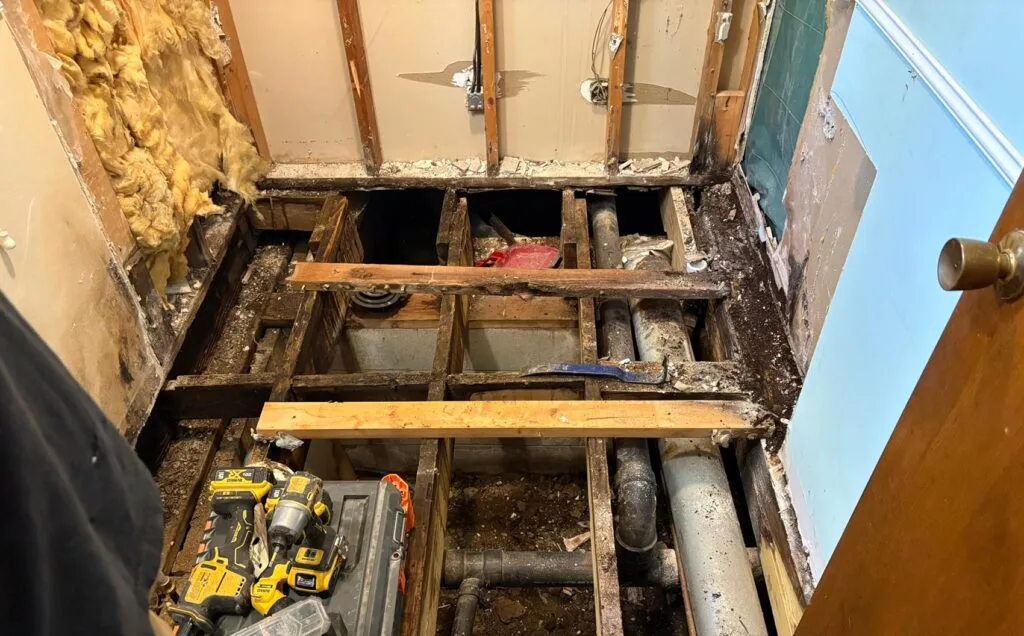
A leaking tile shower is rarely “just a little water.” Most leaks start behind the tile, then spread into framing, subflooring, insulation, and adjacent rooms. By the time you notice a stain or soft floor, the problem usually has been building for weeks or months. If you’re planning a bigger upgrade, our Bathroom Remodeling page breaks down options, timelines, and what a full remodel typically includes.
If you’re in Terre Haute or anywhere in Vigo County, seasonal humidity and temperature swings can make small failures show up fast, especially in older bathrooms with dated waterproofing.
Quick Answer
Most tile showers leak because the waterproofing system failed, or isn’t present, not because the tile is “bad.” Common causes include missing or incorrect shower pan liners, no pre-slope under the liner, clogged weep holes, poor drain connection, or water getting behind the tile through cracked grout and corners that were grouted instead of caulked. The safest next step is to stop using the shower, dry the area, and have the shower pan and waterproofing evaluated before hidden rot or mold spreads.
Why tile showers leak
Tile and grout are not waterproof. They are a decorative, durable surface, but water still gets through grout lines and corners. A tile shower only stays dry if the system behind it is built correctly: sloped surfaces, a proper drain connection, and a continuous waterproofing layer that directs water to the drain.
When any part of that system is missing or installed wrong, water finds the easiest path into wood and drywall.
The most common leaking tile shower causes
1) Failed or missing shower pan liner
Older showers often use a PVC/CPE liner under the mortar bed. If it’s missing, cut too low, punctured by fasteners, or not wrapped correctly at corners, water escapes at the curb or edges.
2) No pre-slope under the liner
A liner must sit on a sloped base so water moves toward the drain. Without a pre-slope, water pools in the mortar bed, stays saturated, and eventually finds seams, nails, or low spots to leak out.
3) Clogged weep holes at the drain
Weep holes allow water in the mortar bed to drain. If they’re clogged with mortar or debris, water backs up and leaks at the perimeter or curb.
4) Cracked grout, corners, and movement joints
Corners and change-of-plane joints should be flexible (caulked) because walls and pans move slightly. When those corners are grouted, hairline cracking happens and water gets behind the tile.
5) Wrong wall board or no waterproofing on walls
Cement board is not waterproof by itself. Neither is “green board.” If there’s no waterproofing membrane behind or on top of the backer, moisture migrates into studs and insulation. Go Board is a waterproof wall board.
6) Curb failure
Curbs fail when the liner is cut or fastened through the top/inside of the curb, or when the curb isn’t properly wrapped and sealed. This is one of the most common “leak shows up outside the shower” scenarios.
7) Niches, benches, and shelves done without proper waterproofing
Any horizontal surface in a shower is a leak risk. Niches and benches must be fully waterproofed and sloped slightly to shed water back into the shower.
8) Bad drain connection or improper drain type
A traditional liner system requires a clamping drain. Surface-applied membranes require a bonding flange drain. Mixing systems or using the wrong drain can create leaks that are hard to trace.
Signs your tile shower is leaking behind the walls
A leak isn’t always obvious. Watch for these warning signs:
- Soft or “spongy” floor near the shower
- Musty smell that lingers even after cleaning
- Loose tile, hollow-sounding tile, or cracked grout lines returning quickly
- Bubbling paint, swollen baseboards, or peeling drywall on the other side of the wall
- Water stains on ceilings below (two-story homes)
- Darkened caulk lines, persistent mildew, or grout that stays wet for hours
If you’re seeing any of these, it’s smart to treat it as an active leak until proven otherwise.
How we diagnose a leaking tile shower (plumbing vs. waterproofing)
The goal is to confirm where the water is coming from and whether the failure is a plumbing issue or the shower system behind the tile.. A proper diagnosis usually includes:
- Checking the valve, shower arm, and drain connection for active plumbing leaks
- Inspecting corners, curb edges, and penetrations where water commonly escapes
- Looking for moisture patterns (baseboards, adjacent rooms, ceiling below, framing direction)
- Testing the shower in a controlled way to see when and where moisture appears
- Performing a pan/flood test when appropriate to confirm a shower base failure
- Documenting findings (photos + notes) so the repair scope is clear before demo starts
What problems a leaking tile shower can cause
Tile shower leaks don’t just damage tile. They damage the structure.
Structural damage
Water rots subfloors, wall plates, studs, and joists. Over time, the shower area can develop a dip or bounce, which makes tile crack even more and accelerates failure.
Mold growth and indoor air quality issues
Wet cavities are perfect for mold. You might not see it until drywall is removed, but spores can still affect the air in the home.
Electrical risks
Bathrooms often have outlets, switches, fans, and lighting near wet walls. Water intrusion can create corrosion or unsafe conditions.
Pest attraction
Moist areas can attract carpenter ants and other pests that like damp wood.
Expensive “secondary repairs”
The shower rebuild is one cost. The hidden costs are often subfloor replacement, framing repair, insulation, drywall, and sometimes remediation.
What to do immediately if your tile shower is leaking
Here’s the safest approach before you start tearing anything out:
- Stop using the shower
Even “one more quick shower” can soak framing again. - Dry the area
Run the bathroom fan, use a dehumidifier, and open access points if you can (for example, a vanity toe kick or an adjacent closet wall panel if available). - Document symptoms
Take photos of stains, cracked grout, and any visible damage. This helps with estimating and decision-making. - Check obvious plumbing first
A dripping shower arm, loose drain cover, or failing valve can mimic a pan leak. A good inspection separates plumbing leaks from waterproofing failures. - Plan for a proper evaluation
A real diagnosis usually involves checking the drain, pan, curb, and wall waterproofing. A flood test is often the quickest way to confirm pan failure.
Can a leaking tile shower be repaired without a full replacement?
Sometimes, but only in specific situations. “Surface fixes” help only when the waterproofing system is still intact. Another issue is finding the same tile that is already in the shower.
When a partial repair might work
- A small plumbing leak (valve, shower arm, drain connection) is the true cause
- A few cracked grout lines at corners where flexible sealant was never used
- A single failed detail that can be opened and rebuilt correctly without disturbing the pan
When replacement is the smarter option
- Soft floor, rot, or visible water damage outside the shower
- Repeated grout cracking and tile loosening
- Persistent musty smell or suspected mold
- Known old liner shower with curb or pan issues
- Any shower that fails a flood test
If the waterproofing behind the tile is wrong, regrouting is only cosmetic. The leak will come back.
Typical repair paths and cost ranges
Every job is different, but these ballpark ranges help you plan. Pricing depends on access, how long the leak has been active, and whether the waterproofing system needs rebuilt.
| Repair path | Typical range (West-Central Indiana) | Best for |
|---|---|---|
| Minor plumbing fix (valve/drain connection) | $250–$1,200 | Leaks caused by a plumbing component, caught early |
| Targeted rebuild (niche/bench/one wall) | $1,200–$4,500 | Localized failure with solid pan and limited damage |
| Full shower rebuild | $6,500–$15,000 | Most reliable long-term fix when waterproofing is compromised |
| Structural repairs (subfloor/framing) + rebuild | $9,000–$25,000+ | Common when the leak ran long enough to rot framing/subfloor |
What most affects the price:
- Tile size/finish level and whether materials are special-order
- Shower size and features (niches, benches, glass, multiple valves)
- How much demo and drying is needed before rebuilding
- Hidden damage (subfloor, studs, insulation, drywall, mold conditions)
How to prevent tile shower leaks in the future
A long-lasting tile shower comes down to a complete waterproofing system installed correctly, not extra grout sealer. Choose a contractor who follows the manufacturer’s system (membrane + correct drain), slopes all horizontal surfaces back to the drain, and verifies the waterproofing before tile goes in.
- Use a complete waterproofing system (membrane + compatible drain)
- Make sure the shower pan and all horizontal surfaces are sloped to drain
- Keep movement joints flexible (caulk corners, don’t grout them)
- Waterproof niches and benches as carefully as the pan
- Use proper backer and detailing around valves and penetrations
- Perform a flood test before tile whenever possible
Leaking tile shower in Terre Haute or Vigo County?
If you suspect a shower leak, the safest move is to stop using it and get a real diagnosis. At Patriot Property Pros, we evaluate the cause, document what’s happening behind the tile, and recommend the most reliable repair path so you’re not paying twice for the same problem.
Frequently Asked Questions
Leaking tile shower in Terre Haute or Vigo County?
A leaking tile shower usually means water is getting past the surface and into the walls or subfloor. The sooner it’s diagnosed, the smaller the repair tends to be. If you’re seeing stains, soft flooring, loose tile, or a musty smell, stop using the shower and let’s figure out what’s really going on.
We’re a Terre Haute Chamber of Commerce member, and we document what we find so you have a clear scope before any major work begins. If you’re considering a full upgrade instead of a patch, see our Bathroom Remodeling in Terre Haute service page for local details and examples.
Patriot Property Pros serves Terre Haute and Vigo County with shower leak evaluations and reliable repair options, from targeted fixes to full rebuilds with proper waterproofing. Contact us today to schedule an inspection and get a clear, written plan to fix your shower and prevent repeat damage.
Serving Terre Haute, Clinton, Rockville, and surrounding areas.
