
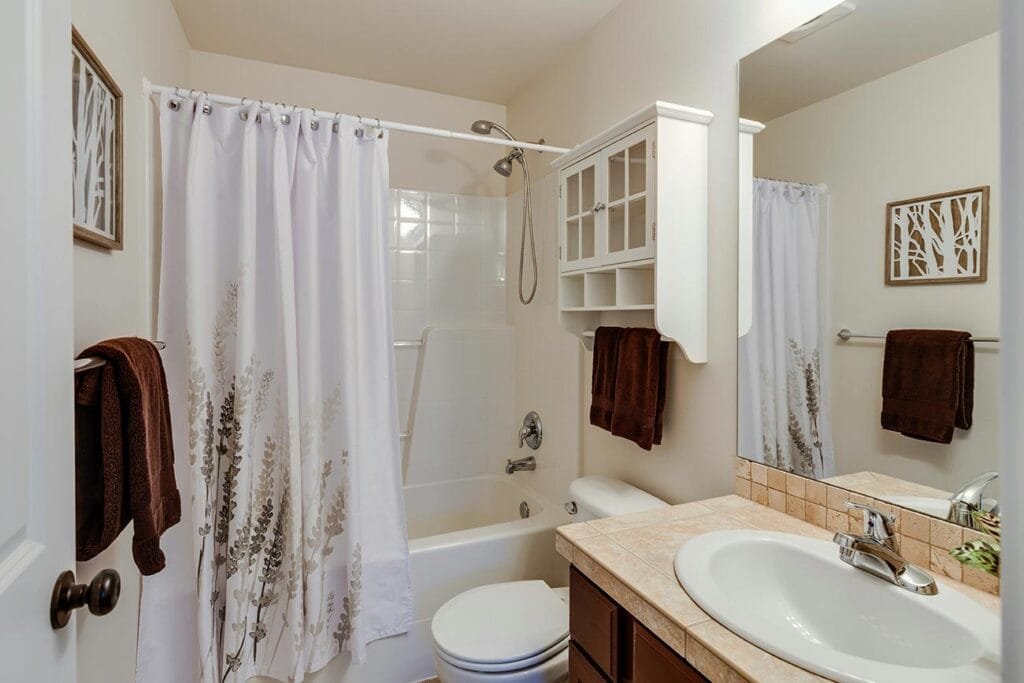
Bathroom Layout Mistakes That Make Life Harder (and How to Fix Them in Terre Haute Homes)
A bathroom that looks good but feels awkward to use will drive you nuts every single day. The biggest problems usually aren’t the tile or the paint color, they’re layout mistakes that make it hard to move, hard to clean, and hard to share the space with anyone else.
If you live in an older home around Terre Haute or the rest of West-Central Indiana, chances are your bathrooms are small, narrow, or chopped up. The good news: most of the worst layout issues can be fixed with smart planning, not just a bigger budget.
Quick Answer
The most common bathroom layout mistakes are tight door swings, cramped toilets, undersized or awkward showers, no real dry zone to step onto, vanities and storage that block movement, forgotten storage, poor fan and light placement, and trying to cram too many fixtures into a small room.
You can usually fix them by:
- Planning clear paths from the door to the main fixtures and adjusting door swings
- Respecting practical clearances around toilets, showers, and vanities instead of just what fits on paper
- Choosing the right-size shower or tub for the room and giving yourself a safe, dry step-out area
- Scaling vanities and storage to the actual floor plan and coordinating the layout with fan, lighting, and window locations
In a typical Terre Haute house with 5×7 or 5×8 baths, a thoughtful layout is what turns a tight, awkward room into a space that feels surprisingly comfortable and easy to use every day.
Common Bathroom Layout Mistakes and How to Fix Them
1. Door Swings That Block Everything
One of the most common layout issues is a bathroom door that swings into a toilet, vanity, or someone using the room. You see this in a lot of older homes where the door was placed wherever it fit and no one thought about how the room would actually function.
When the door is in the way, every trip to the bathroom feels like a little obstacle course, and it can even be unsafe in an emergency.
Signs this is an issue
- The door hits the toilet or forces you to squeeze around it.
- Anyone entering has to brush past the person at the sink.
- The door blocks towel bars, switches, or storage when open.
- You often leave the door half open because it feels awkward to use fully.
How to fix it
- Reverse the swing so the door opens toward a blank wall instead of into fixtures.
- Use a pocket door in tight 5×7 or 5×8 layouts where the framing makes it realistic.
- Consider a smaller-width door if the opening allows and clearances are still met.
- Move light switches to a location that works with the new door plan so you are not reaching behind the door.
A simple door change can make a small bathroom feel one size bigger without moving any plumbing or major walls.
2. Cramped Toilet Clearances
Toilets need room on both sides and in front. When they are jammed into corners or right next to a tub, the space feels uncomfortable and can be difficult for some people to use, especially older adults or anyone with mobility issues.
Even if your home in Terre Haute was built before modern codes, you still feel it in daily use when the toilet is squeezed.
Signs this is an issue
- Your knees hit a wall or tub when you sit down.
- There is almost no elbow room on at least one side.
- The toilet is the first thing you see directly in line with the door.
- The toilet paper holder ends up behind you or far out of easy reach.
How to fix it
- Shift the toilet a few inches during a remodel if the plumbing layout allows.
- Use a compact elongated or round-front toilet in tight spaces to gain a little clearance.
- Rework the vanity or tub size so the toilet has more breathing room without expanding the room.
- In a full gut, adjust wall locations slightly to give the toilet its own zone with comfortable front and side clearances.
A toilet that feels comfortable and not squeezed in makes the whole room feel more thoughtfully designed, even when the overall footprint is small.
3. Undersized or Awkward Showers
Too many bathrooms end up with showers that are technically there but unpleasant to use: tiny square stalls, shower doors that hit toilets, or controls you have to reach through cold spray to operate. In older homes, you often see add-on showers carved out of leftover space instead of being planned as part of the layout.
Signs this is an issue
- You cannot turn around comfortably without bumping walls or glass.
- The shower door cannot fully open because of a nearby toilet or vanity.
- The valve is directly under the showerhead, so you get blasted turning it on.
- The drain is in a corner where water does not naturally flow and puddles stay put.
How to fix it
- Aim for a shower that feels like a rectangle, not a tight square, when the room allows.
- Place the valve closer to the entry so you can turn water on without stepping fully into the spray.
- Choose glass styles and door swings that clear nearby fixtures and do not trap you behind the door.
- In new builds or major bathroom remodels, slope floors toward a centered or linear drain that matches how water actually moves in the space.
Even a modest-sized shower can feel good to use if the proportions, door placement, and controls are well planned from the start.
4. No True Dry Zone
Many bathrooms do not give you a real dry place to stand when you step out of the shower or tub. Water ends up on the toilet, vanity, or main walking path, and the floor stays damp far longer than it should.
Over time, that constant moisture can be hard on flooring and baseboards, especially in busy households.
Signs this is an issue
- Bath mats are always soaked and never seem to dry out.
- The only place to step out is right in front of the toilet or door.
- Towels are far from the exit point, so you drip across the room to reach them.
- Water streaks or splashes regularly show up on the vanity, toilet, or door.
How to fix it
- Position the shower or tub so there is a clear step-out zone with room for a mat.
- Keep that zone free of door swings and major traffic paths so it stays usable.
- Place towel bars or hooks within easy reach of that dry zone so you can grab a towel before you take a step.
- Use slip-resistant flooring in the area where wet feet will land most often to reduce fall risk.
A dedicated dry zone is a small layout detail that dramatically improves safety and comfort, especially on cold Indiana mornings.
5. Vanities and Storage That Block Movement
It is tempting to squeeze in the biggest vanity that fits on paper. In reality, oversized vanities and poorly placed tall cabinets can choke a bathroom and make it feel like a narrow hallway instead of a room.
In older Terre Haute homes, you often see a good-sized vanity shoved into a tight space because it was available, not because it fit the layout.
Signs this is an issue
- Vanity doors or drawers hit doors, knees, or each other when opened.
- A tall linen cabinet creates a tunnel effect near the entrance and makes the room feel smaller.
- You cannot have two people pass each other near the sink without bumping into something.
- The corner of the vanity or cabinet sits right in the main walking path.
How to fix it
- Scale the vanity to the room and choose drawer layouts that work with nearby doors and walls.
- Use shallow-depth vanities in tight bathrooms to preserve floor area and walking space.
- Place tall storage away from pinch points, often at the end of the room instead of right by the door.
- Consider split storage: a main vanity plus a narrow linen cabinet or recessed niche instead of one large, blocky piece.
Good storage should make the room more usable, not more crowded or hazardous to walk through.
6. Nowhere for Towels, Toiletries, and Cleaning Supplies
A layout that forgets storage forces everything onto the counter or into random bins. That leads to clutter and makes it harder to clean or see early signs of leaks, mold, or water damage.
You feel this every day when there is nowhere logical to put everyday items.
Signs this is an issue
- Towels hang over doors because there is no good wall space left for bars or hooks.
- Countertops are buried under bottles, brushes, and chargers with no clear home.
- There is no obvious place to stash a plunger, toilet brush, or cleaning products out of sight.
- Shelves or organizers end up in odd spots that block outlets, switches, or vents.
How to fix it
- Plan towel bars, hooks, and rings at the same time as fixtures, not as an afterthought.
- Use drawer stacks for everyday items and deeper cabinets for bulk storage and linens.
- Add recessed niches or mirrored cabinets where walls allow to gain storage without eating floor space.
- Designate a specific zone, often near the toilet, for cleaning supplies and a small waste bin so they are accessible but not on display.
A layout that includes storage in the right places makes the room easier to live with every day and easier to keep clean.
7. Ignoring Ventilation and Natural Light in the Layout
Ventilation and light locations are part of the layout too. A fan in the wrong spot or a shower stuffed into a dark corner can make a bathroom feel damp, cave-like, and harder to keep mold-free.
In a humid bathroom, especially in winter, poor fan placement can show up as peeling paint and musty smells.
Signs this is an issue
- The fan is far from the shower or tub, so steam lingers long after you are done.
- There is no way to get natural light near the vanity or main mirror.
- Condensation regularly forms on walls and ceilings, even with the fan running.
- The mirror fogs up badly and stays cloudy long after showers.
How to fix it
- Place the fan or fan–light combination where it can capture steam, often near or over the shower area.
- Coordinate window placement with the shower and vanity so you get light without losing privacy or critical wall space.
- In tighter bathrooms, consider a layout that allows a smaller window or skylight to bring in light without sacrificing storage.
- Use light fixtures and bulb types that balance brightness with low glare at the mirror so you can actually see what you are doing.
Good layout makes it easier for your ventilation and lighting plan to do its job and keeps the room feeling fresh.
8. Trying to Cram Too Many Fixtures Into a Small Room
The last big layout mistake is wanting everything in a footprint that does not support it: a separate tub and shower in a tiny primary bath, a double vanity in a 5×7, or a full laundry stack in a narrow hall bath.
On paper you can sometimes make the clearances work, but in real life nothing feels comfortable.
Signs this is an issue
- Walking space between fixtures shrinks to narrow strips that feel unsafe.
- Showers or tubs become so small that no one actually enjoys using them.
- Clearances technically meet minimums, but you constantly bump into corners and edges.
- Storage ends up crammed above toilets or doors in ways that feel awkward or hard to reach.
How to fix it
- Decide which fixture matters most for how you live and give it priority in the layout.
- In small primary baths, choose one great shower or a tub–shower combo instead of forcing both.
- Consider a larger single vanity with better storage instead of a tight double vanity that leaves no counter space.
- If you want laundry nearby, explore placing it in an adjacent closet or hallway instead of squeezing machines into the bath itself.
Editing the number of fixtures often makes the room feel more high-end, not less, because everything that remains has room to breathe and function properly.
Finishing Touches: Colors and Visual Tricks to Make Small Bathrooms Feel Bigger
Once the layout works, you can use colors and finishes to make a compact bathroom feel more open. These changes will not add square footage, but they can change how the room feels every time you walk in.
Lighter, connected surfaces usually help small bathrooms the most. Light to medium wall and ceiling colors keep the edges of the room from feeling harsh, and a single, consistent floor material helps the eye read the space as one larger area instead of several slices. If you are using wall tile or wainscoting, running it at a consistent height around the room creates a clean horizontal line that feels calm instead of busy. Grout colors that blend with the tile rather than fight it also keep surfaces from looking choppy.
Clean sightlines matter just as much as color. Simple, straight-line vanity cabinets almost always feel better in a tight space than very heavy or ornate profiles. A larger mirror over the vanity can bounce light and visually widen the room, especially when it reflects a lighter wall instead of a dark corner. Tall storage is still useful, but it usually works best concentrated on one wall so you are not closing the room in from every direction. The same idea applies to accessories: when towel bars, hooks, and shelves are planned in a small group instead of scattered randomly, the room feels more organized and open.
Contrast is still important, but it works better when it is intentional. Stronger colors or darker tile usually feel best on one main feature such as the shower wall or the floor, while the surrounding surfaces stay lighter and quieter. Keeping the ceiling a lighter shade helps it feel a little higher, which matters in older bathrooms with modest ceiling heights. It also helps to pick one or two main finishes for faucets, hardware, and light fixtures and repeat them, instead of changing styles and metals in every corner.
Finally, let light do some of the work. Layered lighting with a good overhead source and clear, comfortable light at the mirror keeps shadows from shrinking the room. Clear or lightly frosted shower glass can keep sightlines open where privacy allows, rather than turning the shower into a visual wall. If you have a window, trims or shades that let daylight in while still protecting privacy will make the space feel more generous. In many Terre Haute homes with smaller bathrooms, warm white bulbs paired with these calmer finishes can make the room feel inviting instead of harsh or cave-like.
Bathroom Layout Frequently Asked Questions
Ready to Fix a Frustrating Bathroom Layout?
If your bathroom technically “fits” everything but still feels cramped, awkward, or hard to move around in, it is almost always a layout problem, not a you problem. A few smart changes to door swings, clearances, shower size, and storage can make even a small Terre Haute bathroom feel calmer and easier to use every day.
If you would like help laying out a new bathroom or rethinking an existing one, Patriot Property Pros can walk your space, measure everything, and show you realistic layout options before you start picking tile or fixtures. Whether you are planning a full gut remodel or just want to stop fighting your current floor plan, we can help you design a bathroom that actually fits your home, your routines, and your budget.
Serving Terre Haute, Clinton, Rockville, and surrounding areas.
