
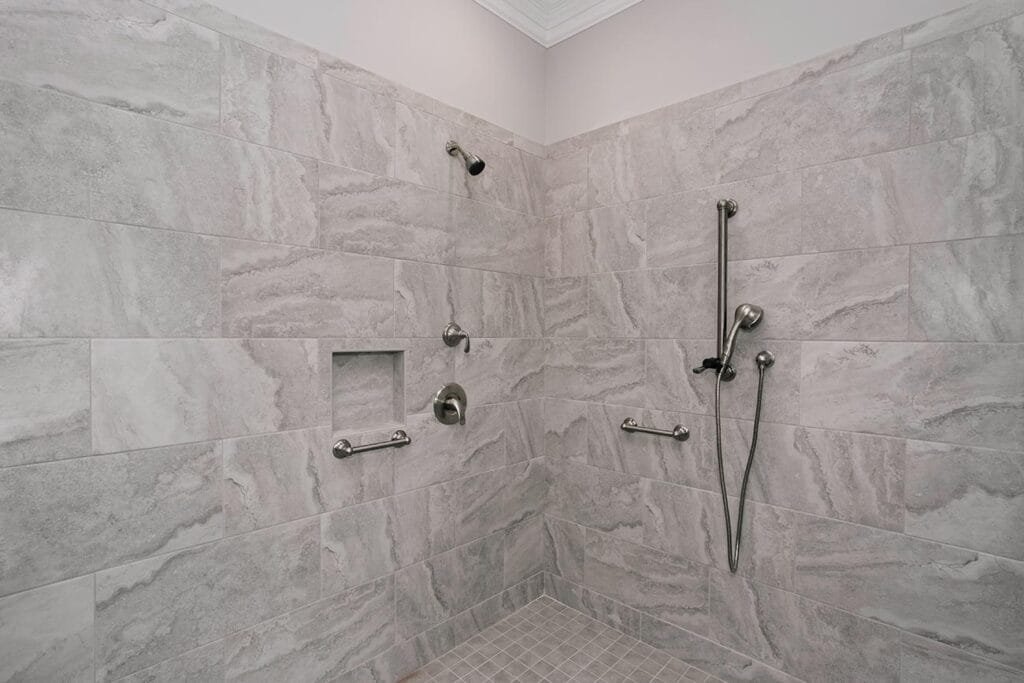
Walk-In Showers for Seniors in Terre Haute
If you are caring for aging parents or planning to stay in your home long-term, a walk-in shower designed for seniors can make everyday life easier and safer. Standard tubs and high-curb showers are one of the most common places older adults slip, trip, or lose their balance. A well-planned walk-in shower with the right safety features can reduce fall risk, simplify bathing, and help seniors remain independent longer.
This guide explains the types of walk-in showers for seniors and the elderly, which safety features matter most, what projects typically cost in the Terre Haute area, and how to plan a safer bathroom around mobility and aging in place.
Quick answer: are walk-in showers better for seniors?
For most seniors and older adults, a walk-in shower is safer and more practical than climbing in and out of a standard tub or high-curb shower, especially when balance, strength, or mobility are changing.
In general, a senior-friendly walk-in shower offers:
- A low-threshold or curbless entry that is much easier to step into with limited balance, stiff joints, arthritis, or mobility aids like canes and walkers.
- Slip-resistant shower flooring, solid grab bars, and a sturdy built-in or fold-down seat to reduce the risk of falls during bathing.
- A handheld shower head on a slide bar and easy-to-reach controls, so there is less stretching, twisting, or reaching overhead.
- A well-lit, open shower space that can accommodate a helper, shower chair, or in some cases a wheelchair for aging-in-place needs.
Not every senior needs a full roll-in or curbless shower, but almost every older bathroom can benefit from a lower step, better grip, and a walk-in shower layout designed specifically with senior safety and comfort in mind.
What makes a bathroom unsafe for seniors?
Before planning a new walk-in shower, it helps to understand why many existing bathrooms are difficult or unsafe for seniors and elderly family members. A few common design issues create most of the slip-and-fall risk.
High step-over tub walls and shower curbs
The classic problem is a tall tub wall or high shower curb. Lifting a leg over 14–18 inches while balancing on one foot is hard even for healthy adults. For seniors with arthritis, balance issues, neuropathy, or joint replacements, this movement is a major fall risk and often the scariest part of bathing.
Slippery flooring and wet surfaces
Smooth tile, worn tubs, and cheap plastic pans can be extremely slick when wet. Add soap, shampoo, and limited grip strength and the chance of losing footing goes up quickly. Without slip-resistant flooring or textured shower bases, even a small puddle can turn an ordinary bathroom into a dangerous space for older adults.
No grab bars or secure handholds
Many older bathrooms only have a towel bar, which is not designed to support body weight. Without proper grab bars anchored into solid backing and placed at the right heights and locations, there is nothing solid to hold onto if balance is lost. Seniors may grab unstable items like shower doors, curtain rods, or shelves, which can fail right when support is needed most.
Tight layouts and poor clearances
Narrow shower doors, tight turns, and cramped spaces make it harder for seniors to move safely, especially if they use a cane, walker, or need help from a family member or caregiver. Limited turning space and door swings that block the pathway can make entering and exiting the bathroom or shower feel unsafe and exhausting.
Low lighting and glare
Older eyes need more light and less glare to see clearly. Dim fixtures, a single overhead light, or shiny surfaces can make it hard to see edges, puddles, or obstacles on the floor. Shadows and glare off glossy tile can hide water or soap, increasing the risk of missteps and falls in an already tight space.
Outdated plumbing and ventilation
Weak ventilation fans and older plumbing can create extra humidity, condensation, and water where it does not belong. Damp floors, fogged mirrors, and musty odors are more than annoyances, they add to slip risk, encourage mold, and can hide small leaks that weaken flooring. Over time, this makes the bathroom less safe and less comfortable for seniors aging in place.
A senior-friendly walk-in shower design addresses all of these issues together instead of just swapping one fixture for another, creating a safer, more accessible bathroom that works better for older adults and caregivers.
Types of walk-in showers for seniors and the elderly
There is no single “right” walk-in shower for every senior. The best choice depends on mobility, balance, budget, and whether this is part of a small update or a full bathroom remodel for aging in place.
One-day or acrylic walk-in shower systems
These systems replace an existing tub or shower with a low-threshold shower base and matching wall panels. They are typically made of acrylic or other solid-surface materials and are designed to go in quickly once materials arrive, which is helpful when a senior cannot be without a bathroom for long.
They can be a good fit when:
- You want a clean, low-maintenance walk-in shower without rerouting plumbing or moving walls
- You need the bathroom back in service as quickly as possible
- You are working within a modest budget but still want safety upgrades like grab bars and seating
- You prefer a simple, easy-to-clean surface instead of grout joints and detailed tile work
For seniors, a one-day shower system often includes:
- A low-threshold shower base
- Built-in or added grab bars in key locations
- An optional fold-down or built-in seat or bench
- A handheld shower with slide bar to make seated or assisted bathing easier
Low-threshold prefab shower units
Prefabricated shower units with low curbs are another option that sits between basic tub replacements and fully custom tile. These can be one-piece or multi-piece units installed directly into a prepared alcove and are common in many accessible bathroom upgrades.
They work well when:
- The existing layout is staying the same and you want to keep plumbing locations
- You want predictable cost and timeline with fewer unknowns
- You need something sturdier and more senior-friendly than a basic tub but do not require full custom tile
- You prefer a factory-finished surface that is easier to keep clean and less likely to leak when installed correctly
Safety features such as grab bars, seats, and handheld shower heads can be integrated or added onto the walls and corners of the unit.
Custom tiled walk-in showers
Custom tiled showers offer the most flexibility in layout, look, and long-term durability. They take more time and involve more steps, especially waterproofing, sloping the floor correctly, and tile work, but can be tailored to a senior’s current needs and future mobility.
Custom tiled walk-in showers are ideal when:
- You want a specific size or shape to improve clearances or allow room for a helper
- You need a built-in bench, multiple niches, or grab bar backing in precise locations
- You prefer the look and feel of tile and glass and want the shower to blend with the rest of the home
- You are addressing moisture issues or reworking an older, problem shower that has leaked or failed before
With proper waterproofing, slope, and detailing, a custom tiled shower can be both beautiful and genuinely safer for seniors and elderly family members.
Roll-in and curbless showers
For seniors who use wheelchairs, rollators, or who have very limited mobility, a curbless or roll-in shower may be necessary. These showers are usually part of a larger accessibility remodel, because they require more extensive subfloor work, precise slope to the drain, and careful planning to keep water contained.
They are most appropriate when:
- A wheelchair, rollator, or shower chair must be able to roll directly into the shower
- Caregivers need more room to assist with bathing from the side or behind
- You want a bathroom that complies more closely with ADA-style clearances and barrier-free design, even if full ADA standards are not required in a single-family home
- You are planning long-term aging in place and want the bathroom to work if mobility declines over time
These projects often require coordination of framing, plumbing, waterproofing, and sometimes minor structural modifications, but they provide the easiest access for seniors with significant mobility challenges and can dramatically reduce fall risk compared to a standard tub or step-in shower.
Safety features to include in a senior-friendly walk-in shower
No matter which type of walk-in shower you choose, certain safety features should almost always be part of the plan. Combining several of these in one accessible shower is what truly lowers fall risk for seniors and elderly family members.
Low-threshold or curbless entry
A threshold that is only a few inches high or no threshold at all makes it much easier to step in and out of the shower. For seniors with walkers, canes, or limited hip and knee mobility, this is one of the biggest improvements over a standard tub and one of the most effective ways to reduce tripping hazards.
Non-slip flooring
Shower floors and bathroom flooring should have textures and finishes that provide traction, even when wet. Many modern tiles and acrylic bases are available with slip-resistant surfaces specifically designed for safety. Pairing non-slip shower pans with slip-resistant bathroom flooring helps create a safer path from bedroom to shower and back again.
Properly placed grab bars
Grab bars are most effective when anchored into solid backing and placed where hands naturally reach during entry, exit, and turning. Vertical and horizontal bars work together to provide support at different heights and positions. Well-planned grab bar placement turns the walk-in shower into a stable, secure space instead of one where seniors reach for towel bars, doors, or fixtures that are not meant to hold body weight.
A sturdy seat or bench
A fold-down seat, built-in bench, or freestanding shower chair gives seniors a safe way to rest while bathing, especially for hair washing or shaving legs. The seat should be at a comfortable height, slip-resistant, and located near the shower controls and handheld sprayer so a person can bathe without straining or twisting.
Handheld shower with slide bar
A handheld shower on a slide bar lets the spray be adjusted for seated or standing use. This reduces twisting, reaching overhead, and leaning on one leg, making it easier and safer for seniors to wash comfortably. A reachable dock location and long, flexible hose are important details for both independent use and assisted bathing.
Easy-to-use controls and anti-scald protection
Lever handles and clearly marked temperature controls are easier for older hands to use than small knobs, especially with arthritis or reduced grip strength. Anti-scald valves help keep water temperature consistent and reduce the risk of sudden hot or cold bursts, which can cause a senior to slip or lose balance in the shower.
Good lighting
Recessed lights over the shower and vanity, combined with brighter general lighting, help seniors see water, edges, and obstacles. Warm, even light reduces glare off tile and fixtures and makes it easier for aging eyes to judge depth and spot wet areas. Motion sensors or night lights can also make nighttime bathroom trips safer.
Wider doors and clear pathways
A wider shower opening, door, or curtain opening gives enough room for walkers, rollators, or caregiver assistance. Just as important is keeping a clear path from bedroom to bathroom with no loose rugs, cords, or clutter. The safest walk-in shower still needs a safe approach route for seniors and anyone helping them.
Designing a walk-in shower around these safety features often costs far less than a hospital visit or long-term injury recovery caused by a preventable fall, and it can make daily routines much less stressful for both seniors and their families.
Designing a safer bathroom around the shower
A senior-friendly walk-in shower is a big step in the right direction, but the rest of the bathroom should also support safety, independence, and aging in place. A truly accessible bathroom reduces fall risks, simplifies everyday tasks, and stays workable if mobility changes over time.
Toilet height and location
Comfort-height toilets with sturdy grab bars on at least one side make sitting down and standing up much easier for seniors with weak knees, hips, or balance issues. Adequate clearance around the toilet is important for walkers or caregiver assistance, and the toilet should be positioned so a person does not have to twist awkwardly to reach paper, grab bars, or the flush handle.
Vanity and sink access
Vanities with rounded corners, lever faucets, and storage at reachable heights help prevent bumps and overreaching. Pull-out drawers are usually easier for older adults to use than deep, low cabinets. In some bathrooms, a more open vanity or wall-hung sink improves knee and wheelchair clearance and makes it easier for someone to sit while using the sink.
Flooring and thresholds
The entire bathroom floor should be slip-resistant, not just the shower. Choosing textured tile, slip-resistant vinyl, or other non-skid surfaces reduces fall risk when floors are damp. Minimizing transitions between flooring types and keeping thresholds low helps reduce tripping hazards, especially for seniors using walkers, canes, or shuffling gaits.
Doors and swing direction
Wider doors (often 32 inches or more) and careful swing direction make it easier to enter and exit the bathroom with mobility aids. A door that swings out instead of into a small bathroom can improve safety if someone falls behind it. In tight layouts, pocket or barn doors can save space and provide better access for walkers, rollators, and caregivers.
Ventilation and humidity control
A properly sized, quiet vent fan with a timer switch helps clear humidity and reduce condensation that can lead to slippery conditions and mold. Good ventilation keeps mirrors and floors drier, improves air quality, and protects finishes, which is especially important for seniors who may be more sensitive to damp, musty spaces.
Storage and clutter
Well-placed shelves, niches, and cabinets reduce clutter on floors and edges, which can otherwise become tripping and snagging hazards. Everyday items like towels, toiletries, and cleaning supplies should be stored at comfortable heights so seniors do not need to climb, stoop, or reach overhead. Keeping cords, hampers, and small trash cans out of the main traffic path makes nighttime bathroom trips safer.
Planning all of these elements together with the walk-in shower design results in a bathroom that works for seniors now and still makes sense if needs change down the road.
How much does a walk-in shower for seniors typically cost in Terre Haute?
Costs vary depending on the size of the bathroom, existing conditions, and whether the project is a standalone tub-to-shower conversion or part of a full senior-friendly bathroom remodel. In the Terre Haute area, many walk-in shower projects for seniors fall into these general ranges.
Typical walk-in shower cost ranges in Terre Haute
| Project type | Typical price range (Terre Haute) | What it usually includes |
|---|---|---|
| Basic tub-to-walk-in-shower conversion | Around $6,000–$12,000+ | Quality acrylic or solid-surface system, low-threshold base, grab bars, seat, valve and trim upgrades, minor wall and flooring repairs |
| Low-threshold prefab shower with safety upgrades | Around $6,500–$13,000+ | Low-curb prefab shower unit, upgraded fixtures, grab bars, optional seat, basic glass door or curtain setup, finish work around the alcove |
| Custom tiled walk-in shower for seniors | Often $15,000–$25,000+ | Custom tiled walk-in shower, waterproofing, niche and bench, upgraded valve and trim, custom glass, possible plumbing or framing adjustments |
| Full senior-friendly bathroom remodel with walk-in shower | Commonly $20,000–$40,000+ | Walk-in shower plus new flooring, vanity, toilet, lighting, ventilation, grab bars, wider doorways, and other accessibility upgrades throughout the bathroom |
These ranges assume licensed trades, permits where required, and materials that balance durability, safety, and appearance. Very small or very large bathrooms, extensive structural repairs, or high-end selections can push costs lower or higher than the typical bands shown here.
The most accurate way to understand cost is to have a contractor look at your specific bathroom, talk through mobility needs and preferences, and provide a written estimate that breaks out each part of the job. A good estimate for a walk-in shower for seniors in Terre Haute will show labor, materials, safety features, and any accessibility upgrades line by line so you can see exactly where your investment is going.
How long does it take to install a walk-in shower for seniors?
Timelines depend heavily on the type of walk-in shower system and whether other work is being done in the bathroom at the same time. Simple tub-to-shower conversions for seniors are much faster than full custom tile or accessibility remodels, especially in older Terre Haute homes.
Typical walk-in shower timelines in Terre Haute
| Project type | Typical working days | What usually happens during that time |
|---|---|---|
| One-day or acrylic walk-in shower systems | About 1–3 working days | Remove old tub or shower, set new low-threshold base and wall system, install valve, trim, grab bars, and seat, plus caulking and cleanup |
| Prefab low-threshold shower units | About 1–3 working days | Demo old unit, prep alcove, install multi-piece low-curb shower, add safety features, seal and finish surrounding walls and trim |
| Custom tiled walk-in showers for seniors | About 5–10+ working days | Demo, framing and subfloor repairs, waterproofing, tile setting, grouting, and glass measurement and installation, plus punch-list details |
These ranges reflect active working days in the bathroom once materials are on site. One-day and acrylic walk-in shower systems are the quickest option for seniors when the layout stays the same. Custom tiled walk-in showers involve more steps and cure time but offer more flexibility for benches, niches, and precise grab bar placement.
When a walk-in shower for seniors is part of a full bathroom remodel in Terre Haute, it usually fits into a broader bathroom timeline that includes flooring, vanity, toilet, lighting, and accessibility upgrades. A contractor familiar with Terre Haute homes can look at your specific bathroom and give you a realistic range, along with a week-by-week outline of what will happen and when the shower will be out of service.
Common questions about walk-in showers for seniors
How Patriot Property Pros helps Terre Haute seniors and families
At Patriot Property Pros, we work with seniors, adult children, and homeowners planning to age in place across Terre Haute and Vigo County. The goal is to make bathrooms safer and easier to use without turning them into cold, institutional spaces.
For walk-in showers and senior-friendly bathrooms, that often means:
- Visiting your home to see how you move through the bathroom now, where trouble spots are, and how the layout affects balance, reach, and clearances.
- Talking through mobility concerns, medical recommendations, future plans, and how long you want to stay in the home so the remodel supports aging in place instead of just today’s needs.
- Recommending walk-in shower options and safety features that fit your budget and timeline, from basic tub-to-shower conversions with grab bars to custom tiled showers with benches and wider openings.
- Coordinating permits, inspections, and scheduling so the bathroom is out of service for as little time as practical, especially in one-bathroom homes or when seniors have limited backup options.
- Installing grab bars, seats, non-slip surfaces, better lighting, and wider or easier-to-operate doors as part of a cohesive design, not as random add-ons.
- Helping you phase work when needed, starting with the highest-impact safety upgrades now and planning future improvements as budget and needs allow.
The end result is a safer, more accessible bathroom that feels like part of your home, not a hospital room with practical upgrades that can make daily routines less stressful for both seniors and family members.
Ready to plan a safer walk-in shower for a senior in your home?
If you are thinking about a walk-in shower for an elderly parent, grandparent, or for your own long-term comfort, the easiest next step is a clear plan. A short in-home visit can uncover hidden risks in your current bathroom and show what is possible within your space and budget.
Schedule a bathroom safety and walk-in shower consultation, and Patriot Property Pros will walk your bathroom with you, talk through mobility and aging-in-place goals, and provide a written estimate with options. You will see how different walk-in shower designs, safety features, and scopes affect cost and timeline so you can choose the right solution for your Terre Haute home.
Serving Terre Haute, Clinton, Rockville, and surrounding areas.
