
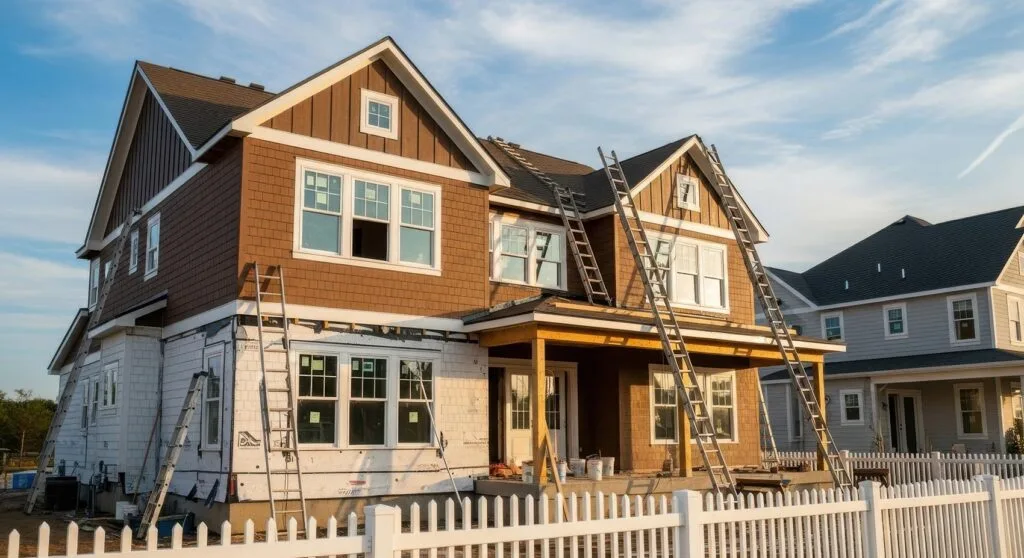
New Home Build Cost in Indiana: What Impacts Price Most?
Build costs in Indiana can swing a lot, even with the same square footage. This guide breaks down the real factors that change your final price (lot and sitework, utilities, foundation type, floor plan complexity, and finish selections) so you can set a realistic budget before you commit to plans. If you’re building in West-Central Indiana, including Terre Haute and Vigo County, you’ll also learn what local site conditions and seasonal timelines can do to your bottom line.
Building a new home in Indiana is one of the few times you can control the layout, the comfort, and the long-term durability from day one. But pricing can feel all over the place because “new home build” can mean a simple ranch on a flat lot or a fully custom home with a basement, complex rooflines, and premium finishes. The truth is the final cost is mostly driven by a handful of decisions and conditions that repeat on nearly every project: the lot, the foundation, the shape of the house, your selections, and the schedule.
This post breaks down realistic planning ranges, the cost factors that move the budget the most, and how to make decisions that keep the build predictable. It’s written to help you budget before you fall in love with a plan that doesn’t match the numbers.
Cost per square foot in Indiana (planning ranges)
Square footage matters, but it’s not the whole story. A smaller custom home can cost more than a larger “simple” home if it has a basement, higher-end windows, and selection-heavy kitchens and bathrooms. Use the ranges below as planning guidance so you can ask better questions early.
| Build level | Typical cost per sq ft (planning) | What this usually includes |
|---|---|---|
| Economy | $140–$180 | Simple layout, basic finishes, standard windows/doors |
| Mid-range | $180–$260 | Better materials, more options, stronger finish package |
| Custom | $260–$400+ | Complex design, premium finishes, specialty features |
These ranges don’t automatically include every “site” cost (like long utility runs, driveway length, septic/well, major grading). That’s why two homes with the same square footage can land far apart.
Why two homes with the same size can cost very different amounts
Most homeowners start by asking, “What does it cost per square foot?” That’s a useful starting point, but builders price risk and complexity as much as size. A straightforward footprint with an uncomplicated roof, clustered plumbing, and standard window sizes is faster to build and easier to dry-in. A home with bump-outs, multiple valleys, vaulted ceilings, and lots of custom openings is slower and requires more labor, more material, and more coordination.
The best way to budget is to treat cost as a formula: base build + site and utilities + selections + complexity + timing. When you understand which items change those variables, you can control them.
The biggest price drivers for a new home build in Indiana
Below are the factors that move your cost the most. I’m keeping the lists tight here and using more explanation so you can see how each driver actually affects your construction budget in Indiana.
Lot and sitework (often underestimated)
Sitework is the “make the lot buildable” category. If the lot is flat, dry, and easy to access, this part stays reasonable. If the lot is sloped, wet, heavily wooded, or far from the road, costs rise fast. Sitework also tends to uncover unknowns such as soil conditions, buried debris, drainage problems that can’t be priced perfectly until equipment is on site.
What matters most is not just the lot size, but how hard it is to build on it. A small but challenging lot can cost more than a larger, easy one because it takes more time and more material to get it ready.
Utilities and distance (the silent budget killer)
Utility costs aren’t just “connect the lines.” Distance and access are everything. If electric, water, sewer (or septic), and gas are close and simple, you’re fine. If they require long trenching runs, boring under driveways, or special approvals, you’ll feel it in the budget.
This is one of the reasons rural builds can swing widely. The home itself may be straightforward, but the infrastructure to support it may not be.
Foundation type (slab vs crawl vs basement)
Foundation choice affects excavation, concrete, waterproofing, and the long-term moisture performance of the home. Basements add cost because they add scope: deeper digging, more concrete, more waterproofing detail, and more inspection steps. Crawlspaces are in the middle and require good vapor control, insulation, and drainage details to avoid musty air and moisture issues.
In Terre Haute, Indiana, getting the water management right at the foundation is not optional. If you don’t handle drainage and waterproofing correctly, you’re not saving money, you’re buying future problems.
The footprint and roof complexity (shape costs money)
Square footage is easy to understand, but shape is where pricing gets real. Each corner, bump-out, jog, and roof valley adds framing time and increases the chance of slowdowns. More complicated rooflines also mean more flashing details and more risk if it’s done poorly.
If you want a high-quality build with less stress, a simpler footprint is one of the strongest budget controls you have. You can still make a simple footprint feel custom with interior finishes, lighting, and smart layout choices.
Your “selections” package (kitchens, baths, windows, flooring)
Selections are where budgets blow up because the price range is massive. Cabinets, countertops, tile, plumbing fixtures, lighting, and flooring can vary by tens of thousands depending on the level you choose.
The biggest mistake is assuming you’ll “figure it out later.” Late selections create two problems: they force change orders, and they create schedule delays. Delays increase labor and can push work into bad weather windows, which can affect exterior progress and drying times.
Budget breakdown: where the money usually goes
Instead of chasing one big number, break the budget into buckets. This makes estimates easier to compare and helps you spot when a quote is missing important scope.
| Category | Typical share of total budget | Why it matters |
|---|---|---|
| Sitework + utilities | 5%–20% | Lot conditions and distance can swing wildly |
| Foundation | 8%–15% | Slab/crawl/basement and waterproofing details |
| Framing + sheathing | 15%–25% | Shape, spans, roof complexity, lumber package |
| Exterior shell | 10%–18% | Roofing, siding, windows, doors, flashing |
| Mechanical rough-ins | 10%–18% | HVAC, plumbing, electrical, service size |
| Insulation + drywall | 6%–12% | Comfort, efficiency, and drying timeline |
| Interior finishes | 15%–30% | Cabinets, flooring, tile, trim, paint, fixtures |
| Contingency | 3%–8% | Unknowns, upgrades, and real-world surprises |
If you’re in the Terre Haute area, site drainage and seasonal weather windows are often the buckets that change the pace and cost the most, especially on lots that need extra grading or water management.
Timeline: how long a new home build takes in Indiana
A realistic timeline matters because time affects cost. Delays aren’t just annoying, they can increase labor, extend equipment rentals, and push certain phases into worse weather.
| Phase | Typical duration | What often slows it down |
|---|---|---|
| Pre-construction planning | 4–12+ weeks | Plan changes, budgeting, engineering |
| Permits + approvals | 2–8+ weeks | Jurisdiction timelines, incomplete docs |
| Sitework + foundation | 2–5 weeks | Weather, soil issues, inspections |
| Framing + dried-in shell | 3–8 weeks | Roof complexity, material lead times |
| Rough-ins | 2–5 weeks | Coordination, layout changes |
| Insulation + drywall | 2–4 weeks | Inspection timing, drying conditions |
| Interior finishes | 4–10+ weeks | Cabinets/tile/flooring lead times |
| Final punch + closeout | 1–3 weeks | Missing fixtures, final inspection scheduling |
A well-run build isn’t “fast at all costs.” It’s steady, sequenced, and planned so materials and decisions are ready before each phase starts.
How to lower cost without lowering quality
There’s a difference between saving money and cutting corners. The best savings come from simplifying structure and making decisions early, not from skipping the details that keep a home dry and durable.
The most reliable cost controls are:
- Simplify the footprint and rooflines
- Cluster plumbing walls (kitchen and baths near each other)
- Use standard window sizes where possible
- Decide your finish level early and set realistic allowances
- Spend on the things that are hard to change later (structure, insulation approach, mechanical design)
- Limit custom framing details (vaults, tray ceilings, oversized openings)
If you want a home that “feels” higher-end without a custom-level budget, focus on smart layout, storage, lighting, and a clean finish package rather than expensive structural complexity.
Allowances: the most common reason budgets drift
Allowances can be helpful when you haven’t selected exact items yet, but they can also hide cost. A low allowance makes an estimate look better on paper and guarantees you’ll exceed it later.
A healthy allowance plan is one that matches the reality of your taste. If you already know you want tile showers, quality fixtures, and quartz counters, the allowance should reflect that from the beginning. Otherwise you’ll feel like everything you want is an “upgrade,” even though it’s just normal mid-range selection.
What to look for in an estimate (so you can compare bids correctly)
The goal of an estimate isn’t just a number, it’s clarity. The more specific the scope, the fewer surprises you’ll have.
An estimate should clearly describe the build system, not just the finishes. It should tell you what kind of foundation and waterproofing is included, what window tier is assumed, what roofing and siding scope is included, and what’s excluded (driveway, landscaping, permits, specialty sitework). When two bids are far apart, it’s usually because scope or allowances are far apart.
Example budgets (how the same square footage can price differently)
Here’s why “per square foot” can be misleading.
Example 1: 1,900 sq ft simple ranch, mid-range finishes, easy lot
If you’re building on a flat lot with utilities nearby, your “site” bucket stays reasonable. A simple roofline and standard window package keep framing and exterior scope efficient.
Planning math:
- Base build (mid-range): 1,900 × $200 = $380,000
- Sitework/utilities: $20,000
- Contingency/upgrades: $20,000
Planning budget: about $420,000
Example 2: 1,900 sq ft with basement, complex rooflines, selection-heavy interior
Same size home, but now you’ve added basement excavation and waterproofing, roof complexity, more corners, upgraded windows, and a higher finish package.
Planning math:
- Base build (custom-leaning): 1,900 × $280 = $532,000
- Sitework/utilities: $30,000
- Contingency/upgrades: $30,000
Planning budget: about $592,000
Same square footage. Very different scope.
Example: a 2,000 sq ft mid-range home often lands in the $360k–$520k planning range before land and major sitework.
Frequently Asked Questions
Ready to Price Your New Home Build With Real Numbers?
If you’re planning a new home in Indiana, the fastest way to avoid budget surprises is to price the build like a builder does: evaluate the lot and utilities, choose the foundation, and lock in a realistic finish level early. Patriot Property Pros can help you map out the big cost drivers, set smart allowances for kitchens, baths, windows, and flooring, and build a clear plan that keeps your schedule and budget predictable. Reach out to schedule a walkthrough and get a straightforward budget range based on your site and your goals, so you can move forward with confidence.
Serving Terre Haute, Clinton, Rockville, and surrounding areas.
