
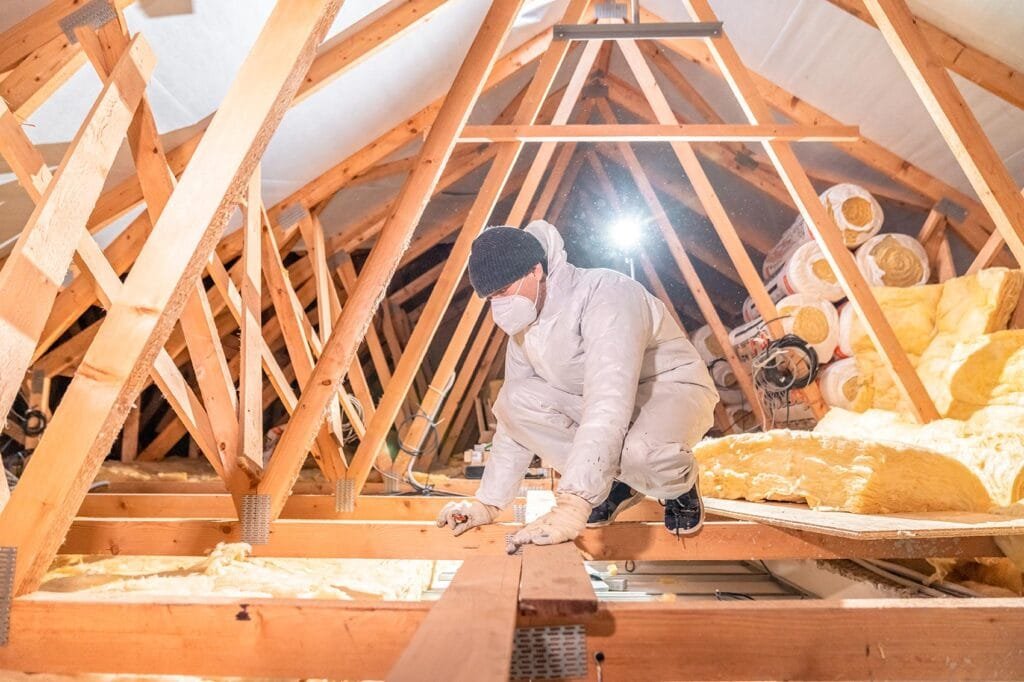
Attic Insulation Cost in Terre Haute, IN (2026 Pricing)
Wondering what attic insulation costs in Terre Haute, IN? Most homeowners can upgrade attic insulation for a predictable range, but the final price depends on attic size, access, existing insulation, and the R-value you’re trying to reach. Below you’ll find clear cost tables, Indiana R-value targets, and an easy bag estimate method to help you budget before getting quotes.
Attic insulation in Terre Haute typically costs $1,200–$3,500 for most homes, depending on attic size, access, existing insulation, and your target R-value. Many Indiana homeowners aim for R-49 for better comfort and lower energy loss. Blown-in insulation is often the fastest, most cost-effective attic upgrade.
If your home feels drafty, your upstairs won’t stay comfortable, or your heating and cooling bills keep creeping up, your attic insulation is often the first place to check. In Terre Haute and across Vigo County, the attic is one of the biggest “energy loss zones” because heat rises and escapes fast when insulation is thin, uneven, or missing.
The good news is that attic insulation is one of the most cost-effective home upgrades you can make. It can improve comfort in both summer and winter, reduce HVAC run time, and help stabilize room-to-room temperatures. In this guide, you’ll get realistic 2026 price ranges, what affects the cost, and a simple way to estimate how many bags of blown-in insulation you may need.
Quick Answer: What does attic insulation cost in Terre Haute?
Most homeowners in Terre Haute can expect to spend about $1,200 to $3,500 for a typical attic insulation upgrade. The final price depends on attic size, access, existing insulation condition, and the R-value you’re trying to reach. A smaller top-off costs less, while a full upgrade designed to hit modern performance targets costs more.
A simple way to estimate your cost is to measure attic square footage and decide if you need a quick “top-off” or a full upgrade to a higher R-value. In many Indiana homes, aiming for R-49 is a strong target for comfort and energy performance.
If you’d rather have it installed professionally, check out our insulation contractor in Terre Haute page: https://patriotpropertypros.com/insulation-contractor-terre-haute/
Average attic insulation costs in Terre Haute (2026 price ranges)
Attic insulation pricing is usually based on scope. Some homes only need an added layer to improve depth and coverage, while other homes need a full upgrade to correct thin spots, gaps, and low overall R-value. The bigger the improvement needed, the more material and labor will be involved.
These ranges are designed to help you plan realistically for Terre Haute and Vigo County homes. Exact totals depend on access, existing insulation, and whether air sealing or removal of old insulation is needed.
Typical cost ranges by attic size
| Attic Size | Blown-In Top-Off (Add More Insulation) | Full Upgrade (Reach R-38 to R-49) |
|---|---|---|
| 800 sq ft | $900–$1,800 | $1,800–$3,200 |
| 1,200 sq ft | $1,200–$2,400 | $2,500–$4,200 |
| 1,600 sq ft | $1,500–$3,100 | $3,200–$5,300 |
| 2,000 sq ft | $1,800–$3,600 | $3,800–$6,200 |
These are typical planning ranges for standard attic access. If your attic is low-clearance, hard to reach, or has tight areas that slow movement, labor time can increase. Older homes in Terre Haute can also have attic layouts that take more time to work in safely and evenly.
What affects attic insulation cost the most?
Two attics can be the same size and still price out differently. Insulation performance depends on more than square footage because coverage quality matters. Thin spots, gaps, and airflow can reduce performance even when insulation is present.
Here are the biggest cost factors that matter most in Terre Haute homes.
1) Your target R-value
The higher the R-value goal, the more material you need. Many Indiana homeowners aim for around R-49 in the attic because it’s a strong balance of comfort and energy performance for all four seasons. If your attic is under-insulated right now, reaching that target often produces the biggest comfort improvement.
2) Existing insulation condition
If the insulation already in the attic is dry and in decent condition, topping it off can be cost-effective. If it’s crushed, uneven, missing in areas, or contaminated, the attic may require more correction work to perform properly. The goal is consistent coverage that doesn’t leave weak zones.
3) Air sealing needs
Even great insulation can underperform if warm air is leaking into the attic around penetrations like light fixtures, chases, and gaps at top plates. Basic air sealing can improve results by reducing drafts and heat loss. It adds a little to the scope, but it’s often worth it because it helps your insulation do its job.
4) Attic access and layout
Easy access saves time. Tight attics require more careful movement, more setup, and slower work to keep coverage even. Some Terre Haute homes have limited attic space or tricky access points, which can influence labor time and the overall project total.
Blown-in insulation vs fiberglass batts (price and performance)
Both blown-in insulation and fiberglass batts can work well when installed correctly. The best option depends on attic layout, what’s already installed, and whether you need to work around obstacles.
Blown-in insulation is popular for attics because it helps achieve even coverage across large areas. Fiberglass batts can work great in open framing situations, but they require consistent placement and full contact to avoid gaps that reduce performance.
Blown-in insulation (most common for Terre Haute attics)
Blown-in insulation is popular because it:
- covers uneven areas better than batts
- fills around wires, pipes, and framing obstacles
- installs quickly when access is decent
- helps reduce thin spots that weaken performance
In many attic upgrades, blown-in is the easiest way to bring the attic up to a consistent depth without leaving weak areas.
Fiberglass batts (best for open framing and targeted areas)
Batts can be a strong choice when:
- attic areas are open and easy to reach
- you’re insulating smaller sections rather than the entire attic
- framing bays support full contact installation
- you want a simple set-in-place approach
For many homeowners, blown-in is often the best value because it’s easier to achieve consistent coverage, which is where the comfort gains come from.
What R-value should your attic be in Indiana?
Attic R-value is one of the biggest drivers of comfort in a home. In Indiana, the attic is where heat loss often happens first during winter because warm air rises and escapes through the ceiling plane when insulation is thin.
A strong target for Terre Haute and Vigo County homes is typically R-49 in the attic, especially if you want stable indoor temps and better efficiency.
| Area | Recommended R-Value |
|---|---|
| Attic | R-49 |
| Exterior Walls | R-13 to R-21 |
| Floors over Unconditioned Areas | R-30 |
If you’re not sure what you have now, measure insulation depth and compare it to typical R-value per inch for that material. It’s a quick check that helps you understand whether you’re under-insulated.
Blown-in insulation depth by R-value (attic planning guide)
Blown-in insulation depth depends on the material you use. Cellulose typically delivers more R-value per inch than fiberglass blown-in, so it usually reaches the same performance with slightly less thickness. For the most accurate numbers, always double-check the coverage chart on the insulation bag, but the table below is a reliable planning range for most Terre Haute attic upgrades.
| Target R-Value | Cellulose Depth (Approx.) | Fiberglass Blown-In Depth (Approx.) |
|---|---|---|
| R-30 | 8–10 inches | 10–12 inches |
| R-38 | 10–12 inches | 12–14 inches |
| R-49 | 13–15 inches | 15–18 inches |
| R-60 | 16–18 inches | 18–22 inches |
For many Indiana homes, R-49 is a strong all-around target for attic insulation. If your attic currently has thin coverage or uneven spots, bringing it up to this range can make a noticeable difference in comfort and help reduce drafts.
How many bags of blown-in insulation do you need?
Bag count is one of the most common homeowner questions because it helps you plan costs and materials. There isn’t one universal number because coverage depends on insulation type and how much depth you need to reach your target R-value.
Your bag count depends on:
- attic square footage
- target R-value
- insulation type (cellulose vs fiberglass)
- the coverage chart printed on the bag label
Step-by-step bag estimate (simple method)
- Measure your attic square footage
- Pick your target R-value (R-49 is a strong Indiana goal)
- Check the coverage chart on the insulation bag
- Divide your attic square footage by the coverage rate
This method is reliable for planning because it matches how insulation is labeled and sold for real-world installs.
Quick example
If your attic is 1,200 sq ft and your target is R-49, check the bag label. If it says “each bag covers 20 sq ft at R-49,” then:
1,200 ÷ 20 = 60 bags
That’s a clean planning estimate for budgeting. Real installs can vary slightly depending on attic layout and depth consistency, but this gets you very close.
Attic insulation thickness guide (what depth you actually need)
Most attic upgrades come down to choosing a target and getting even depth across the attic floor. Insulation performance drops if you have thin spots, gaps, or compressed areas, even if other areas are deep.
Here’s a practical planning guide:
- R-38: good baseline improvement
- R-49: best all-around target for Indiana homes
- R-60: higher performance, but not always necessary
If your attic only has a few inches of insulation right now, upgrading to a modern target can make the home feel noticeably more stable. Many Terre Haute homeowners notice fewer cold drafts in winter and less heat buildup upstairs during summer.
What’s included in a professional attic insulation quote?
A good quote should be specific, not vague. The goal is to know what performance level you’re getting and what work is included in the install, so you can compare quotes fairly.
A professional attic insulation quote should include:
- attic square footage estimate
- target R-value and planned insulation depth
- insulation type and approximate quantity
- whether basic air sealing is included
- cleanup and final coverage check
- estimated timeframe to complete the work
When comparing quotes, make sure each one targets the same R-value. Otherwise, one price may look lower simply because less insulation is being installed.
Timeline: How long does attic insulation take?
Attic insulation is usually fast compared to most home upgrades. Many top-offs and standard upgrades can be completed in a single day, especially if the attic has good access and doesn’t require removal.
| Project Type | Typical Time Needed |
|---|---|
| Small top-off (under 1,000 sq ft) | 2–4 hours |
| Standard upgrade (1,000–1,600 sq ft) | 4–8 hours |
| Large attic (1,600–2,200 sq ft) | 1 day |
| Removal + upgrade | 1–2 days |
If air sealing is included, the job can take longer, but it often produces better real-world comfort results because insulation works best when air movement is controlled.
Signs your attic insulation is costing you money
Many homeowners don’t realize insulation is the issue until they notice repeated comfort problems or higher-than-expected utility bills. In Terre Haute, these symptoms are common during winter cold snaps and summer heat waves when the attic is absorbing or leaking the most energy.
Common signs include:
- rooms that won’t stay warm in winter
- hot upstairs during summer afternoons
- higher bills without major lifestyle changes
- cold drafts near ceilings and exterior walls
- uneven temperatures from room to room
- ice dams or roof melt patterns in winter
- HVAC running longer than it should
- visible thin spots or bare attic floor areas
Even small improvements can help, but the biggest results come from consistent coverage across the entire attic floor.
How to save money on attic insulation (without cutting corners)
The cheapest insulation job isn’t always the best value. The best value comes from doing it correctly so your money turns into real comfort gains. Most problems happen when insulation is uneven, compressed, or installed without addressing basic air leakage.
To get the best performance per dollar:
- air seal major attic leaks before adding material
- prioritize attic insulation before walls in most homes
- aim for even depth across the attic floor
- choose the right R-value for Indiana’s seasons
- keep insulation fluffy, not compressed
- address moisture issues before upgrading
If you want your home to feel consistently comfortable, the real goal is even coverage and reduced air movement. That’s when attic insulation pays off.
FAQ: Attic insulation cost and planning
Ready to Upgrade Your Attic Insulation in Terre Haute?
If your home feels drafty, your upstairs won’t stay comfortable, or your energy bills keep climbing, attic insulation is one of the smartest upgrades you can make. Patriot Property Pros helps Terre Haute and Vigo County homeowners choose the right R-value, improve coverage, and get real comfort results that last. Reach out today for an estimate and let’s make your home warmer in winter, cooler in summer, and more efficient year-round.
Planning a full remodel too? Visit our General Contractor in Terre Haute page to see how we handle larger renovation projects: https://patriotpropertypros.com/general-contractor-terre-haute/
Serving Terre Haute, Clinton, Rockville, and surrounding areas.
