
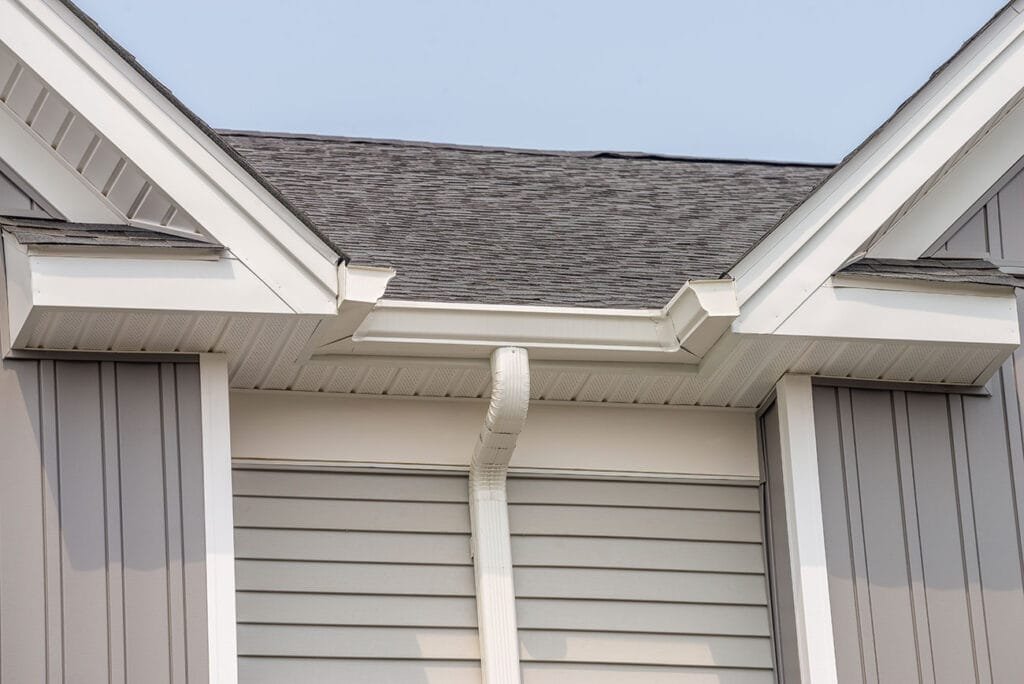
Roof Edge Protection: Siding, Soffit & Fascia in Terre Haute
If your roof edges are soft, peeling, or pulling away, it’s almost always a water management problem, not just “old paint.” In the Wabash Valley. Protecting your siding, soffit, fascia, and gutters is about one thing: controlling water at the roofline so it never gets a chance to sit, wick, or sneak behind your trim.
Here’s the short version for homeowners around Terre Haute and West-Central Indiana:
- Keep water moving off the roof and into properly sized, clear gutters.
- Seal and flash every transition where siding meets roof, fascia, or gutters.
- Vent the attic and soffits so trapped moisture can’t rot wood from the inside.
- Choose materials and details that stand up to freeze–thaw cycles, wind, and humidity.
The rest of this guide walks through how to do that in real-world terms you can use on your own home or when hiring a contractor.
Why Roof Edges Rot in Our Climate
Roof edges and gutter lines on Indiana homes live in the splash zone. Heavy rain, snow melt refreezing at the eaves, summer humidity, and wind-driven storms all push water toward your siding, soffit, fascia, and gutters. When that moisture isn’t controlled, rot starts quietly and usually shows up for the same core reasons:
- Water running behind the gutters
Missing or damaged drip edge, gutters pulled loose from the fascia, or gutters pitched the wrong way let water slide down behind the system instead of into it. That constant wetting soaks fascia boards, siding edges, and rafter tails. - Siding installed too tight to roofing
When vinyl, fiber cement, or engineered wood siding is run directly down onto shingles, it can wick water up into the boards. In our freeze–thaw cycles, that trapped moisture breaks coatings, swells edges, and invites decay. - Poor soffit ventilation and trapped attic moisture
Unvented or under-vented soffits let warm, moist air from the house collect at the roofline. That moisture can condense on the roof deck, rafter tails, and fascia from the back side, rotting wood even when the exterior paint still looks “okay.” - Unsealed gaps at joints and fasteners
Tiny gaps around nails, miters, and trim seams hold water. When those details stay wet instead of drying out, paint fails early, boards soften, and gutters or fascia start to move, opening even more paths for water intrusion.
Once those areas stay damp, everything unravels: paint peels, wood fibers break down, fasteners lose their grip, gutters sag, and more water is dumped exactly where it shouldn’t go. Stopping that cycle with proper siding clearances, drip edge, sealed transitions, and real ventilation is the key to keeping Wabash Valley roof edges solid for the long term.
What Each Piece Does (And Why It Matters)
Your roof edge is a water management system, not a pile of separate parts. When it’s detailed correctly, it keeps rain, snow melt, and humidity away from your framing, insulation, and foundation. When one piece is wrong, the others get pushed past their limits, and that’s when you start seeing rot, peeling paint, and sagging gutters on homes across Terre Haute and the Wabash Valley.
Here’s how each component should work as a team:
- Siding
Shields exterior walls from wind-driven rain and directs water down and away from the structure. Proper clearances at the roofline and tight flashing keep moisture from sneaking behind your cladding.. - Soffit
Covers the underside of roof overhangs and often provides intake ventilation for the attic. When vented correctly, soffits pull in fresh air so heat and moisture can escape instead of sitting at the roof edge and breaking down wood. - Fascia
The vertical board at the end of the rafters that caps and protects the roof edge. Fascia creates a solid mounting surface for gutters and trim; if it’s soft or undersized, gutters loosen and start dumping water where it doesn’t belong. - Gutters and Downspouts
Collect runoff from the roof and move it safely away from siding, door and window trim, walkways, and foundations. Correct sizing, slope, and secure fastening are what keep water off your fascia, soffit, and wall assemblies.
If one part in that chain fails like a gutter pulled loose, unvented soffits, or siding run too low, the rest of the system has to carry more water than it was designed for. That’s why quick, “cheap” fixes at the roofline can quietly damage sheathing, framing, and siding over a few Indiana seasons. Treating the roof edge as a single integrated system is how you get long-term protection instead of chronic repairs.
6 Critical Details That Keep Roof Edges Dry
These are the specific details we build into siding, soffit, fascia, and gutter projects around Terre Haute and the wider Wabash Valley to stop rot before it starts. Getting these right is what separates a quick cosmetic job from a long-lasting exterior.
- Proper drip edge and gutter interface
The drip edge is your first line of defense at the roof edge. If it’s missing or wrong, everything below pays for it.- Install metal drip edge under the shingles and over the fascia so water sheds forward.
- Tuck gutters under the drip edge, or use a gutter apron, so runoff can’t sneak behind the gutter and soak the fascia.
- Make sure the first course of shingles overhangs just enough to drop cleanly into the gutter, not behind it and not past it.
- Correct gutter sizing and slope
Gutters for Indiana storms need to be sized and pitched for real volume, not just looks.- Use 5″ K-style gutters on simple rooflines; step up to 6″ on steep, complex, or large surfaces.
- Pitch gutters roughly 1/16″–1/8″ per foot toward each downspout so water actually moves.
- Avoid flat or back-pitched runs that overflow at the fascia and soak the siding, soffit, and foundation.
- Smart siding clearances at roof edges
Siding that’s too tight to roofing or decks is one of the fastest ways to wick water.- Never run vinyl, fiber cement, or engineered wood siding directly onto shingles or step flashing.
- Maintain a clean, visible gap between siding bottoms and roofing or flashing so water can drain and surfaces can dry.
- Follow manufacturer clearance specs so moisture can’t sit at the edge and your siding warranty stays intact.
- Sealed transitions and protected end grain
The ends of boards and trim are moisture sponges if they’re not prepped.- Prime, paint, or seal all cut ends of fascia, trim, and siding before installation.
- Use high-quality exterior sealant at key joints and penetrations while keeping drainage paths open.
- Add proper step flashing and kick-out flashing where roofs meet walls; never rely on caulk alone to stop water.
- Balanced soffit ventilation at the eaves
Good ventilation protects from the inside out by reducing condensation and heat buildup.- Use vented soffit panels tied into a continuous ridge vent or approved roof exhaust system.
- Match or slightly exceed intake (soffit) ventilation to exhaust so moist attic air can escape instead of parking at the roof edge.
- Avoid boxed-in or painted-shut soffits that trap bath fan moisture and accelerate rot at rafter tails and fascia.
- Solid fastening into structure, not just skin
Hardware and fastening patterns matter as much as the products.- Hang gutters with hidden hangers or screws driven into rafter tails or structural backing, not just thin fascia cladding.
- Fasten fascia and soffit materials into solid framing so they don’t flex or pull loose in Wabash Valley windstorms.
- Remember the rule: loose gutters lead to water behind the fascia, and water behind the fascia leads directly to rot.
Dialing in these six details gives you a roofline that actually manages water, protects your siding system, and holds up to Indiana’s storms instead of slowly rotting from the edges in.
Choosing Materials That Survive Indiana Weather
You don’t have to rebuild everything with specialty products, but smart combinations at the roofline make a big difference in how your siding system ages. The goal for Terre Haute and Wabash Valley homes is simple: stable materials, clean drainage, low maintenance, and details that don’t trap water.
Here are four durable setups that work well in our climate:
- Fiber cement siding + aluminum fascia wrap + vented vinyl or aluminum soffit
- Fiber cement handles sun, wind, and hail with minimal movement.
- Aluminum-wrapped fascia protects vulnerable edges from splash-back and gutter leaks.
- Vented soffit panels provide consistent intake air for attic ventilation.
- Engineered wood siding + metal fascia + vented soffit panels
- Factory-finished engineered wood gives a clean, wood-look profile with better moisture resistance.
- Metal fascia adds a tough, sealed skin over structural wood.
- Matching vented soffits keep air moving at the eaves to reduce condensation and rot.
- Premium vinyl siding + aluminum fascia + continuous vented soffit system
- Quality vinyl sheds water and never rots when detailed with proper flashing and clearances.
- Aluminum fascia creates a straight, durable mounting surface for hidden-hanger gutters.
- Continuous vented soffits support balanced attic ventilation across the whole roofline.
- Historic or character homes + protected wood trim + metal fascia wrap + modern gutters
- Use primed and back-painted wood only where exposure is visible and intentional.
- Wrap fascia in metal to carry most of the weather load quietly in the background.
- Pair with seamless gutters sized for your roof so the original details stay protected.
Key details to prioritize across all setups:
- Choose rot-resistant or metal-wrapped fascia in high-splash and gutter-heavy areas.
- Use hidden-hanger gutter systems with structural fasteners so runs stay tight to the fascia.
- Lean toward lighter soffit colors where possible; they reflect heat, brighten overhangs, and make early staining or leaks easier to spot.
When these combinations are installed with the right clearances, flashing, and ventilation, you get a roofline that works as a true system that is protecting your siding, soffit, fascia, and gutters for many Indiana seasons instead of just surviving the next storm.
Attic Moisture, Insulation, and Roof Edge Rot
Rot at the roofline is not always a “bad gutter” issue. A lot of damage in Terre Haute and Wabash Valley homes starts on the inside: warm, moist indoor air leaking into the attic, condensing on a cold roof deck, and quietly rotting sheathing, rafter tails, and fascia from behind. From the ground, the paint can still look fine while the structure is already soft.
Cut the risk by tightening up these details:
- Air seal ceiling penetrations
Seal around bath fans, recessed lights, electrical boxes, and attic hatches so humid indoor air can’t drift into the attic and park at the eaves. - Vent fans to the exterior
Run bathroom and dryer vents directly outdoors, not into the attic or soffit cavity. Dumping steam or lint into the attic almost guarantees condensation and mold at the roofline. - Keep soffit vents clear
Make sure insulation isn’t stuffed tight against the soffits. Use baffles where needed so intake air can flow freely along the roof deck. - Level out attic insulation
Maintain even insulation coverage so heat doesn’t escape in “stripes” that melt snow unevenly at the eaves. That helps reduce ice dams and the repeated wet/freezing cycles that punish fascia and roof edges.
When attic air sealing, real exhaust venting, and open soffit intake work together, you protect the roofline from the inside out, not just with caulk and paint on the surface.
8 Early Warning Signs Your Roof Edges Need Attention
Catch problems at the roofline early and you can usually repair instead of tearing everything off. On homes around Terre Haute and the Wabash Valley, these signs often point to moisture getting into siding, soffit, fascia, or gutter connections long before full-blown rot shows up.
Watch for:
- Peeling or bubbling paint on fascia or soffit
Paint that blisters, flakes, or won’t hold gloss usually means moisture is getting into the wood from behind or above, not just surface sun damage. - Dark streaks or algae lines below gutter corners
Staining or algae trails along the siding or fascia under gutter joints signal slow leaks or regular overflow that’s soaking the trim. - Visible gaps between gutters and fascia
Even small separations can let water spill behind the gutter instead of into it, saturating fascia boards and the top edge of your siding. - Wavy, sagging, or twisted gutters
Warped or low spots hold standing water, which increases weight, pulls fasteners loose, and drives more water toward the roof edge and wall. - Soft or crumbly wood at the roofline
If a light probe with a screwdriver sinks into fascia, soffit, or trim, you’re past cosmetic issues and into structural damage that needs prompt attention. - Bird, bee, or wasp activity in soffit gaps
Insects and animals love gaps in soft or open soffits. Their presence often means failing wood, missing vents, or open paths into the attic. - Stains on interior ceilings near exterior walls
Yellow or brown spots just inside outside walls can indicate ice damming, roof edge leaks, or moisture working in from compromised fascia or flashing. - Splash-back dirt stripes high on siding under eaves
Dirty, wet bands under the roof overhang can show where water is overshooting or leaking from gutters and repeatedly hammering the same section of siding.
If you’re seeing two or more of these on your home, it’s time for a thorough roofline and siding inspection, not just another coat of paint.
Repair vs Replace: Simple Guidelines
Use these guidelines to decide whether you’re looking at a simple repair or a full roofline rebuild. The goal is always the same: fix the cause of the moisture, not just the symptom.
- Localized damage, solid surrounding wood
- A small soft spot or isolated peeling section with otherwise firm fascia, soffit, and siding can often be handled with spot repairs.
- Replace the bad section, correct the flashing or gutter issue above it, and seal all cut ends and joints properly.
- Paint failure every 1–2 seasons
- If you keep repainting the same fascia or soffit and it peels or bubbles again within a year or two, you don’t have a “paint problem.”
- Look for water running behind gutters, missing drip edge, poor venting, or siding run too tight. Fix the detailing before touching another brush.
- Gutters pulling away in multiple areas
- Loose, dipping, or frequently rehung gutters are a sign the system wasn’t fastened into solid structure or is holding too much water.
- Upgrading to seamless gutters with hidden hangers, proper slope, and secure fastening into framing is usually the smart move.
- Widespread soft fascia/soffit and staining
- Multiple soft sections, visible staining, or wavey trim along long runs of roof edge point to long-term moisture, not a one-off leak.
- At this stage, it’s often more cost-effective and safer to do a full fascia/soffit/gutter replacement and inspect the roof deck at the eaves for hidden rot.
The key filter: good contractors don’t just cover rotten wood with metal or add bigger gutters and call it done. They track the water path, check attic ventilation, confirm proper siding clearances, and correct the transitions so the problem doesn’t come back in two Indiana winters.
Why Professional Installation Matters at the Roofline
The roof edge is where roofing, siding, trim, and gutters all meet and that intersection is usually where things go wrong. When details are missed, water finds the weakest point and quietly goes to work on your fascia, soffit, siding, and roof deck.
Here’s why a building-envelope-focused contractor matters for Terre Haute and Wabash Valley homes:
- No gaps between trades
When the roofer thinks “the siding crew will handle it” and the siding crew assumes “the gutter company will fix that,” you end up with missing drip edge, bad terminations, or exposed end grain. One small gap at the roofline can lead to stained ceilings, rotten fascia, or warped siding. - DIY shortcuts take a few seasons to fail
Skipping drip edge, using undersized gutters, running siding too low to the shingles, or nailing into thin fascia skin might look fine on day one. After a couple of Indiana winters, those shortcuts show up as peeling paint, sagging gutters, and soft wood at the eaves. - Warranties depend on correct detailing
Siding, trim, and roofing manufacturers all require proper clearances, fastening patterns, flashing, and ventilation. If those details are wrong, you can lose coverage on expensive materials right when you need it. - Whole-house thinking protects your investment
A good contractor looks at the entire building envelope: roof runoff, gutter sizing, attic ventilation, siding layout, and how each piece handles water. That approach keeps roof edges dry, preserves warranties, and prevents you from paying twice for the same problem.
How Patriot Property Pros Protects Roof Edges (Local Angle)
For homeowners in Terre Haute and West-Central Indiana, protecting siding, soffit, fascia, and gutters starts with treating the roofline as a full system, not a “paint and patch” job. A protection-focused approach looks like this:
- Full roof edge and siding inspection
We start by checking the entire roofline, not just the obvious rot. That includes gutters and downspouts, drip edge, fascia and soffit condition, siding terminations at the roof, and any spots where water can run behind trim. The goal is to map the actual water path and find the weak points before they spread. - Attic ventilation and fan termination check
From there, we confirm that attic ventilation and bath fan/dryer vent terminations are done right. Bath fans blowing into the attic, blocked soffit vents, or unbalanced intake and exhaust are common reasons fascia and roof decks rot from the inside out, even when the exterior still looks “fine.” - Designing a matched, durable system
Next step is building a coordinated setup for your home and roof size: gutters correctly sized and pitched for Indiana storms, metal-wrapped or rot-resistant fascia in splash zones, continuous vented soffits, and siding installed with proper clearances and flashing. Each piece is chosen to move water away cleanly instead of trapping it at the eaves. - Using code-aligned, climate-ready details
Finally, we detail everything to match modern best practices and local code expectations: drip edge integration, kick-out flashing where roofs meet walls, sealed cut ends, secure fastening into structure, and ventilation that works with our freeze–thaw cycles, heavy rain, and wind. That’s what keeps your roof edges, siding, and gutters looking clean and staying solid for years instead of cycling through constant patch repairs.
Frequently Asked Questions
Protect Your Roof Edges Before They Fail
If you’re seeing peeling fascia, sagging gutters, or soft spots along the roofline, this is the time to fix the cause, not just repaint. Patriot Property Pros inspects the full system (siding, soffit, fascia, gutters, and attic ventilation) on homes in Terre Haute and West-Central Indiana, then designs repairs that actually stop water intrusion and prevent future rot. Reach out today to schedule a roofline and siding evaluation and get practical, code-smart recommendations tailored to your home and budget.
Serving Terre Haute, Clinton, Rockville, and surrounding areas.
