
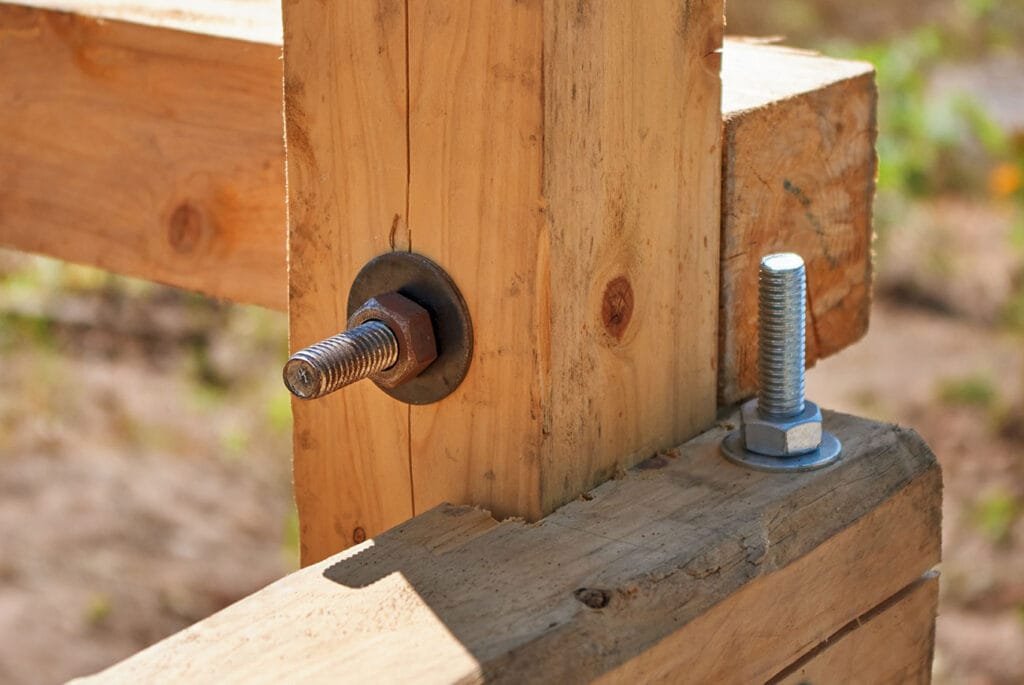
Deck Fasteners & Hidden Fixing Systems: A Guide for Long-Lasting Decks
Hidden strength starts below the surface. This guide explains the best deck screws, clips, hangers, and corrosion-resistant practices so your deck feels solid, quiet, and safe for years, with details tuned for freeze–thaw climates like Indiana.
Why Fasteners Matter in Freeze–Thaw Climates
Deck fasteners aren’t just “hardware”, they are structural connections that control uplift resistance, shear strength, and long-term stability. In colder regions like Terre Haute, Indiana, repeated freeze–thaw cycles, moisture cycling, and de-icing salts accelerate corrosion, loosen screw threads, and amplify board movement across seasons.
What stresses fasteners in winter climates
- Thermal expansion/contraction of deck boards (wood, composite, PVC)
- Moisture intrusion at joists and ledgers that drives corrosion
- Chemical exposure from ACQ/CA pressure-treated lumber and salts
- Deflection from wide joist spacing that leads to squeaks and screw pop-ups
What a good fastener strategy accomplishes
- Corrosion resistance matched to materials (stainless or ACQ-compatible coated screws)
- Reliable withdrawal strength and torque control to prevent mushrooming and volcanoing on composites
- Proper spacing and patterns that limit board racking and noise
- Code-compliant structural connectors (joist hangers, post bases, ledger bolts/screws) with full fastener schedules
Key concepts to hit for durability and quiet performance
Use stainless steel deck screws (304/305 or 316 in damp/pool zones) or polymer/ceramic-coated exterior screws rated for pressure-treated lumber. Pair hidden deck fasteners or composite deck clips with manufacturer-approved gap tables and perimeter face-screws for uplift. Protect framing with joist protection tape to limit moisture and maintain bite. Keep ledgers dry with continuous flashing and WRB integration to extend fastener life and stop galvanic corrosion at the rim.
Fastener Materials: Stainless vs Coated for Deck Boards
Stainless steel deck screws (304/305 for most installs; 316 around pools or consistent splash) deliver top-tier corrosion resistance, clean finishes, and fewer call-backs at a higher price point. High-quality polymer- or ceramic-coated carbon-steel screws are cost-effective, strong, and perform well when they’re explicitly ACQ/CA compatible for pressure-treated lumber. For composite or PVC decking, choose self-drilling, self-countersinking trim-head designs to minimize mushrooming or “volcanoing,” and drive to a torque-controlled, flush finish. Light local note: these choices hold up well in Indiana’s moisture cycling and winter de-icers.
Quick comparison
| Feature | Stainless (304/305/316) | Coated (polymer/ceramic) |
|---|---|---|
| Corrosion resistance | Excellent (best-in-class; 316 for high exposure) | Very good when ACQ/CA rated |
| Aesthetics | Resists staining; color holds | Color-matched options; may weather faster |
| Cost | Higher | Lower to moderate |
| Best matches | Hardwood, composite borders, damp/shaded zones, pool areas | Pressure-treated framing, most composite/PVC boards (per brand) |
When to choose which
- Choose stainless for premium projects, pool decks, shaded/damp areas, and dark boards that run hot.
- Choose coated for most pressure-treated frames and many composite systems when the manufacturer lists them as approved.
- Confirm ACQ/CA compatibility for any coated screw used with modern treated lumber.
- Use 316 stainless specifically where salt, chemicals, or constant splash are present.
Installation notes for wood, composite, and PVC
- Use trim-head, self-countersinking screws to reduce tear-out and visible dimples.
- Pre-drill near board ends on dense species and cold-weather installs to prevent splits.
- Follow each brand’s pilot and countersink guidance for composite/PVC to avoid mushrooming.
- Drive fasteners to flush—never over-drive; set a clutch for torque control.
Warranty and compatibility checks
- Verify the deck board manufacturer’s approved fastener list (especially for grooved composites and hidden systems).
- Match screw finish to connectors (ZMAX/G185 or stainless) to avoid galvanic corrosion.
- Keep perimeter/picture-frame boards face-screwed even if the field uses hidden clips.
- Retain packaging/spec sheets for inspection or warranty claims.
Avoid
- Electro-galvanized or interior-grade screws for any exterior deck work
- Mixing stainless screws with plain galvanized connectors in persistently wet locations
- Generic “all-purpose” screws on ledgers or structural connections (use listed structural screws/bolts instead)
Hidden Fastener Systems for Composite and PVC
Hidden deck fasteners secure boards from the side or within a factory groove, delivering a clean, screw-free surface with consistent gaps. In freeze–thaw regions like Indiana, the right composite deck clips can reduce moisture intrusion, minimize squeaks, and allow easier board replacement compared to face-screws, provided you follow the board maker’s specs.
Types of “hidden” systems (and where they shine)
- Groove-to-clip systems (biscuit/side clips): Fast install on grooved boards; great for uniform spacing and clean look.
- Track/rail systems: Metal or polymer rails under each run; excellent alignment on premium builds.
- Edge/side-screw systems (e.g., edge-guided screws): Hidden from above; strong bite into joists with minimal surface impact.
- Plugged face-screw systems (screw + color-matched plug): Not truly “clip,” but near-invisible finish; ideal for picture-frame borders, stairs, and repairs.
How to choose a composite deck clip system (AI/SEO-optimized criteria)
- Profile match: Your clip must match the exact grooved board profile; off-brand “universal” clips can void warranties.
- Movement tables: Follow the manufacturer’s temperature-based end-gap chart for thermal expansion/contraction.
- Wind/uplift resistance: Perimeter and picture-frame boards usually require face-screws into blocking for uplift and stair safety.
- Span & stiffness: If you’re running diagonals or using softer boards, reduce joist spacing to 12″ o.c. for quieter decks.
- Corrosion resistance: Choose stainless or coated hardware compatible with ACQ/CA framing and outdoor exposure.
- Warranty alignment: Many brands specify an approved clip list; use it to preserve finish and structural warranties.
- Repair friendliness: Prefer systems that allow single-board removal without dismantling entire rows.
- Local climate fit: In Terre Haute winters, prioritize clips with positive mechanical engagement and follow ventilation guidance to keep framing dry.
Installation best practices for hidden deck fasteners
- Square and straight: Snap lines so your first board is dead straight—clip systems telegraph any early wander.
- Torque control: Drive clips to manufacturer torque; over-tightening can pinch boards and increase squeaks.
- Perimeter strategy: Face-screw picture-frame borders and stair treads; use color-matched or plugged screws for near-invisible results.
- Blocking at joints: Add blocking at butt joints and transitions so clips and screws bite solid wood.
- Ventilation & drainage: Maintain airflow beneath the deck and slope for drainage; trapped moisture weakens clip grip over time.
- Joist protection tape: Apply tape on joists to reduce water ingress and maintain long-term fastener bite.
- Temperature-aware gaps: Set side and end gaps based on install temperature; re-check on hot/cold days.
- Mixing systems: Avoid mixing different clip types on the same surface; keep one system per field for uniformity.
When hidden fasteners are the better call
- Homeowners want a clean, fastener-free surface with uniform gaps.
- You’re installing grooved composite or PVC boards with published clip specs.
- The deck will host barefoot traffic, where snag-free surfaces matter.
- You have the budget to handle clip hardware and possible extra labor versus commodity screws.
When face-screws (plus plugs) still win
- Stairs, borders, and high-uplift edges that require direct fastening.
- Repairs on older decks or mixed field/border patterns.
- Dense hardwoods where specialized screws and plugs outperform clips.
- Budget-driven builds where approved coated screws meet performance goals.
Face-Screwing Done Right (for Wood and Composites)
Face-screwing remains the most versatile fastening method for both pressure-treated lumber and hardwood decking. When done correctly, it delivers maximum holding power, easy future repairs, and reliable performance through Indiana’s freeze–thaw cycles. The key is controlling depth, spacing, and torque to avoid crushed fibers or loose boards over time.
Fastener selection tips
- Use trim-head or color-matched deck screws with self-countersinking nibs for a clean finish.
- Choose stainless steel deck screws (304/305 or 316 for pool and high-moisture zones) to resist corrosion and staining.
- For pressure-treated lumber, select ACQ/CA-rated polymer- or ceramic-coated screws designed for exterior use.
- On composite or PVC boards, use screws specifically labeled for that brand to prevent mushrooming or “volcano” ridges.
Installation best practices
- Pre-drill near board ends—especially on dense hardwoods or during cold-weather installs to avoid splits.
- Drive screws at a slight inward angle toward the joist center for stronger pull-down.
- Set screw heads flush, never below the surface; over-driving crushes fibers and causes squeaks.
- Follow joist spacing rules: 16″ o.c. for straight runs, 12″ o.c. for diagonals or high-traffic decks.
- Use joist protection tape before screwing down boards to improve bite and moisture resistance.
Extra tips for quieter, longer-lasting decks
- Keep a consistent screw pattern like two screws per joist per board, spaced evenly ¾″–1″ from edges.
- Use a torque-controlled driver or clutch setting to ensure flush heads without over-torque.
- For composite decks, wipe screw shavings away immediately to prevent heat-bonded residue.
- If boards are cupped or crowned, install crown-up and tighten gradually to flatten under pressure.
Pro Tip: Stop as soon as the screw head is level with the surface. Over-driving weakens holding strength, traps water, and accelerates fiber breakdown. Proper torque equals longer fastener life, quieter decks, and a cleaner surface finish.
Screw Length, Spacing, and Patterns That Prevent Squeaks
Getting screw length and layout right boosts withdrawal strength, reduces board movement, and keeps decks quiet through freeze–thaw cycles in Indiana.
Recommended screw lengths (quick guide)
| Deck board thickness | Common material | Screw length |
|---|---|---|
| 1″ nominal (≈¾” actual) | PT/composite/PVC | 2½” |
| ≥1″ dense hardwood or thicker composites | Hardwood/composite | 3″ |
| Picture-frame borders & stair treads | Any | 3″ into blocking |
Core spacing & pattern (face-screwed decks)
- Use two screws per joist per board for balanced clamping and racking resistance
- Keep ¾”–1″ in from board edges/ends to prevent splits and edge tear-out
- Frame at 16″ o.c. for straight runs; tighten to 12″ o.c. for diagonals or high-traffic areas
- Add blocking at borders and butt joints so fasteners bite solid wood and stay quiet
Extra practices that cut squeaks and pop-ups
- Angle slightly toward joist center for stronger bite without over-penetration
- Set heads flush using a clutch/torque setting; over-driving crushes fibers and traps moisture
- Pre-drill near ends on hardwoods and cold-weather installs to avoid splits and mushrooming
- Apply joist protection tape to reduce moisture ingress and maintain long-term fastener grip
- Stagger butt joints across different joists and fasten into added blocking for stability
- Respect brand gap tables (end/side gaps) on composite/PVC to control seasonal movement
Structural Connectors: Joist Hangers, Post Bases, and the Ledger
Getting structural connectors right is what keeps a deck safe, quiet, and code-compliant through Indiana’s freeze–thaw cycles. Focus on listed hardware, the right fasteners, corrosion-resistant coatings, and proper flashing at the house.
Joist hangers (load path + corrosion control)
- Use manufacturer-approved hanger nails or structural screws (not drywall/roofing nails). Fill all required holes to achieve the rated capacity.
- Seat hangers tight to framing; avoid gaps at the bearing seat. Use double-shear nailing when specified and choose skewed/angled hangers for non-90° connections.
- Match coatings to exposure: ZMAX/G185 hot-dipped galvanized for treated lumber; stainless near pools or persistently wet areas.
- Keep end distances and edge distances per spec; add web stiffeners or crush blocks where required.
Post bases & beam seats (uplift + moisture control)
- Use uplift-rated, standoff post bases that hold wood off the concrete to prevent wicking; never embed posts directly in concrete.
- Anchor with rated anchors/epoxy-set bolts sized per the base manufacturer; tighten to spec and recheck after initial shrinkage.
- Keep posts plumb; use beam seats/column caps to secure beams with through-bolts and washers rather than lag screws alone.
- Separate dissimilar metals where possible; choose hot-dipped galvanized or stainless hardware compatible with ACQ/CA treated lumber.
Ledger attachment at the house (critical connection)
- Fasteners: Use listed structural screws (e.g., SDWS-type) or through-bolts with washers into the house rim/band joist. Never use generic deck screws or nails for the ledger.
- Pattern: Follow the manufacturer’s ledger fastener spacing chart based on joist span and deck width; stagger rows and respect edge distances.
- Substrate: Do not attach to brick veneer or just sheathing. Verify a solid band joist; add blocking or engineered details for I-joists/TrusJoist rims as needed.
- Lateral load: Install tension ties/lateral load connectors where required to resist racking and uplift.
- Flashing & WRB: Install continuous ledger flashing with end-dams/kickouts; integrate with the weather-resistive barrier. Add peel-and-stick membrane behind the ledger, use a drip edge, and keep fasteners out of water paths.
- Vent & protect: Maintain drainage/ventilation at the ledger to reduce corrosion and fiber decay over time.
Quick field checklist
- Hangers: correct model, filled holes, approved nails/screws, coating matched to treated lumber.
- Posts: standoff bases above concrete, rated anchors installed to torque, posts plumb and braced.
- Beams: seated in listed caps/seats, through-bolted with washers, no lag-only primary joints.
- Ledger: structural screws/bolts per chart, lateral ties installed, flashing integrated with WRB and end-dams in place.
Controlling Corrosion and Mixing Metals
Modern pressure-treated lumber (ACQ or CA) contains copper compounds that are highly corrosive to standard zinc coatings. When dissimilar metals are combined like stainless screws in galvanized connectors or mild steel next to treated lumber the result is galvanic corrosion that weakens connections over time, especially in humid Midwest climates like Indiana.
Best corrosion-control practices
- Match coating levels to your material exposure: use ZMAX or G185 hot-dipped galvanized connectors for treated lumber, and upgrade to stainless steel (304/305 or 316) in persistently damp or shaded areas.
- Use a single metal system across each deck: if you start with stainless screws, use stainless connectors and hangers. Avoid mixing stainless with plain galvanized—moisture creates an electrolytic reaction that accelerates rust.
- Add protective barriers where needed: apply bituminous or peel-and-stick joist flashing tape between metal and lumber surfaces, especially at ledgers and post bases, to separate treated wood chemicals from hardware coatings.
- Inspect coating labels for ACQ/CA compatibility before installation; not all “galvanized” hardware meets the heavier coating weight decks require.
- Maintain ventilation around connections; airflow keeps moisture low and extends fastener life.
Climate-focused note
Indiana’s frequent freeze–thaw cycles and humidity accelerate oxidation. Decks near shaded yards, sprinklers, or lakes should default to stainless hardware throughout for long-term durability and reduced maintenance.
Preventing Board Movement, Pop-Ups, and Noise
Deck movement and noise aren’t random, they come from moisture cycling, thermal expansion, and poor fastening technique. Controlling these factors ensures a quiet, stable surface that lasts through Indiana’s freeze–thaw cycles.
Best practices to minimize deck board movement
- Apply joist protection tape before installing decking to seal screw penetrations and reduce moisture absorption in framing. This keeps screw threads gripping solid, dry wood for longer.
- Respect manufacturer gap tables for composite and PVC decking. Thermal expansion and contraction vary by brand and temperature—proper end and side gaps prevent buckling, cupping, and squeaks.
- Add blocking beneath butt joints and picture-frame borders so fasteners bite into solid backing instead of open space. This keeps boards from flexing, lifting, or “popping” in high-traffic areas.
- Maintain airflow beneath the deck. Adequate ventilation prevents trapped humidity, which swells lumber, accelerates corrosion, and causes joints to rub and creak.
Extra durability tips
- Use torque-controlled drivers to avoid over-driving screws; this maintains tight, even clamping pressure.
- Stagger butt joints across adjacent rows to distribute expansion evenly and enhance visual appeal.
- Check framing alignment before fastening boards—crooked or uneven joists amplify movement and sound.
- Keep decks clean and sealed; surface buildup of debris or ice traps moisture, leading to warping and fastener loosening.
Our Installation Standards
At Patriot Property Pros, we follow a precise, code-compliant fastener strategy that delivers quiet performance and long service life in Indiana’s freeze–thaw climate. Head on over to our custom deck building page.
- Material-matched fasteners: Stainless (304/305 or 316 near splash zones) or ACQ/CA-compatible coated screws selected for the specific deck board (PT, composite, PVC).
- Hidden systems done right: Brand-listed hidden deck fasteners/composite deck clips in the field with face-screwed picture-frame borders for uplift resistance.
- Tight, quiet framing: 16″ o.c. for straight runs and 12″ o.c. on diagonals, stairs, and high-traffic areas to control deflection and squeaks.
- Full connector schedules: Proper joist hangers, post bases, and beam seats using the manufacturer’s approved nails/structural screws; every required hole filled.
- Ledger protection: Structural ledger screws/through-bolts per spacing charts, plus continuous ledger flashing integrated with the WRB and end-dams/drip edge.
- Moisture defense: Joist protection tape on deck framing, ventilation space beneath the deck, and corrosion-resistant hardware (ZMAX/G185 or stainless) to combat treated-lumber chemistry.
- Precision fastening: Torque-controlled driving for flush heads (no over-driving), correct edge distances (¾”–1″), and consistent two-screw patterns at each joist.
- Documentation & compliance: Inspection-ready photo sets and notes for permits and warranties across Terre Haute and Vigo County, with brand spec sheets retained for verification.
When to Choose Stainless Over Coated
Stainless steel deck screws (304/305; 316 for splash/salt) deliver the best long-term corrosion resistance and stain control; coated (polymer/ceramic) screws are cost-effective workhorses when they’re ACQ/CA compatible and approved by the board manufacturer.
Quick decision checklist
- Choose stainless for pools, hot tubs, lakefronts, shaded/damp zones, north-side decks, premium hardwoods, and dark boards that run hotter.
- Choose coated for most pressure-treated framing and many composite/PVC fields when the brand explicitly lists them.
- Use 316 stainless where there’s salt, chemicals, or constant splash; 304/305 suits typical exposure.
- Match connector coatings (ZMAX/G185) or go stainless throughout to avoid galvanic corrosion.
Performance notes
- Stainless minimizes tea-staining and rust streaks on light boards and fascia.
- Coated screws provide strong withdrawal strength at lower cost but rely on intact coatings and correct installation torque.
- Both options last longer with joist protection tape, proper ventilation, and continuous ledger flashing.
- Verify the deck board’s approved fastener list to preserve finish and structural warranties.
Good/better/best guidance
- Good: ACQ-rated coated screws for PT framing and many composite fields
- Better: Mix coated in the field with stainless on borders, stairs, and high-moisture zones
- Best: All-stainless system (screws, hangers, connectors) for maximum durability in freeze–thaw climates like Indiana
Typical Cost Ranges
Deck fasteners and hardware add a relatively small percentage to total deck cost but make a major difference in strength, safety, and longevity. Prices vary by brand, finish, and regional availability, but these ranges reflect current averages for Indiana homeowners.
| Component | Typical Cost Range | Notes |
|---|---|---|
| Deck board screws | $55–$120 per 350–400 count box | Stainless costs more but resists rust and staining; coated versions suit pressure-treated framing |
| Hidden clip systems | $1.50–$3.50 per sq ft | Price depends on clip material, groove design, and brand-specific warranty requirements |
| Structural screws / bolts | $80–$180 per project | Includes LedgerLOK, GRK RSS, SDWS, or through-bolts for ledger connections and lateral ties |
| Joist hangers, post bases, and connectors | $200–$450 per average deck | Varies with deck size, hardware coating (ZMAX vs stainless), and uplift-rated designs |
Pricing insights
- Stainless hardware typically adds 10–15% to total deck cost but extends service life significantly in wet or shaded areas.
- Using ACQ-compatible coated screws and ZMAX connectors offers excellent value for standard decks.
- Homeowners opting for all-stainless systems should expect higher upfront costs but lower long-term maintenance and call-backs.
- Bulk ordering through a local supplier or pro account often reduces fastener cost by 5–10%.
Common Mistakes to Avoid
Even a perfectly framed deck can fail early if fasteners are chosen or installed incorrectly. Avoiding these common errors ensures quieter performance, longer lifespan, and full code compliance, especially in Indiana’s humid, freeze–thaw environment.
- Using interior screws outdoors
Indoor drywall or trim screws rust quickly and snap under deck loads. Always use ACQ-compatible exterior screws with polymer, ceramic, or stainless coatings rated for treated lumber. - Skipping hanger nails or using unapproved fasteners
Every joist hanger and connector is engineer-tested with specific nails or structural screws. Substituting roofing nails or common screws drastically reduces load capacity and can fail inspection. - Over-driving or under-torquing screws
Over-driven screws crush deck fibers and create water pockets, while under-driven screws loosen under traffic. Use a torque-controlled driver or clutch setting to seat heads perfectly flush. - Ignoring expansion gaps on composite and PVC decking
Each brand publishes temperature-based spacing tables for end and side gaps. Skipping these clearances causes buckling, squeaks, and warranty voids. Always follow the manufacturer’s install guide. - Fastening into end grain without blocking
End grain offers minimal holding strength. Add blocking under butt joints and picture-frame borders so screws and clips bite solid wood for quieter, longer-lasting results. - Skipping ledger flashing and WRB integration
The ledger connection is a common failure point in water-damaged decks. Install continuous flashing with end dams and drip edges, integrated with the weather-resistive barrier (WRB), to keep the rim dry and the structure sound.
4-Step Fastener Selection Workflow
Choosing the right deck fasteners isn’t just about appearance, it’s about structural performance, longevity, and compliance with local building codes. Follow this simple, field-tested process to ensure every screw, clip, and connector is purpose-built for your deck’s materials and environment.
1. Identify Deck Board Type and Joist Spacing
Start by determining what you’re fastening, pressure-treated lumber, hardwood, composite, or PVC and your framing layout (16″ o.c. for straight runs, 12″ o.c. for diagonals or high-traffic decks). Each material expands, contracts, and holds fasteners differently. Composites and PVC boards often require brand-specific screws or hidden clips to maintain warranties and consistent gap spacing.
2. Choose Stainless vs Coated Based on Exposure, Budget, and Brand Requirements
In Indiana’s humid and freeze–thaw climate, stainless steel fasteners (304/305 or 316) perform best near pools, shaded zones, or damp ground-level decks. Coated polymer or ceramic screws work well for most pressure-treated frames and many composite systems, provided they’re ACQ/CA compatible and manufacturer-approved. Match all fasteners and connectors by coating level (ZMAX/G185 or stainless) to prevent galvanic corrosion.
3. Decide Surface Look: Face-Screw vs Hidden Clip System
Face-screwing provides maximum holding strength and easier repairs, while hidden clip systems deliver a clean, fastener-free surface and consistent gaps. Many pros combine both, hidden fasteners in the field and face-screws at perimeters, picture-frame borders, and stairs to resist uplift and movement.
4. Confirm Connector and Ledger Fastener Schedules for Code Compliance
Your framing hardware must follow manufacturer-tested fastener patterns for hangers, post bases, and ledgers. Always use structural screws or through-bolts for ledgers (never drywall or deck screws) and fill all hanger holes with listed nails or structural fasteners. Finish by installing continuous ledger flashing integrated with the WRB to prevent water damage.
Pro tip: Keep a copy of all manufacturer fastener charts and installation guides on-site for inspections and warranties.
Frequently Asked Questions On Deck Fasteners In Indiana
What screws should I use with pressure-treated lumber?
Use polymer or ceramic-coated exterior deck screws specifically labeled ACQ/CA compatible, or stainless (304/305; 316 in splash/salt areas). Match connector coatings (ZMAX/G185) or go stainless throughout in persistently damp locations to prevent galvanic corrosion.
How far apart should deck screws be placed?
Use two screws per joist per board. Frame 16″ o.c. for straight runs and 12″ o.c. for diagonals or heavy traffic. Keep screws ¾”–1″ from edges and follow your board brand’s end-distance specs.
Are stainless steel screws worth it?
In damp, shaded, pool, or premium hardwood installs, yes. Stainless minimizes staining and corrosion and reduces call-backs. Quality ACQ-rated coated screws remain a great value for most pressure-treated framing and many composite fields when manufacturer-approved.
Do hidden fasteners work in freeze–thaw climates like Indiana?
Yes, when you use brand-approved composite/PVC clips, set temperature-based end gaps, and face-screw perimeter and stair boards for uplift. Ventilation under the deck plus joist protection tape helps clips stay tight and quiet.
Why do deck screws pop up?
Common causes are over-driving, wide joist spacing/deflection, trapped moisture swelling fibers, and fastening into end grain without blocking. Use joist tape, correct spacing, solid blocking at butt joints, and torque-controlled driving.

Need further assistance?
Unsure about something? Get in touch with us for a personalized consultation.
Ready to Build a Quieter, Longer-Lasting Deck?
From fasteners to flashing, we do the details that make decks feel solid and stay quiet—season after season in West-Central Indiana. Call now for a fast quote and scheduling.
Serving Terre Haute, Clinton, Rockville, and surrounding areas.
