
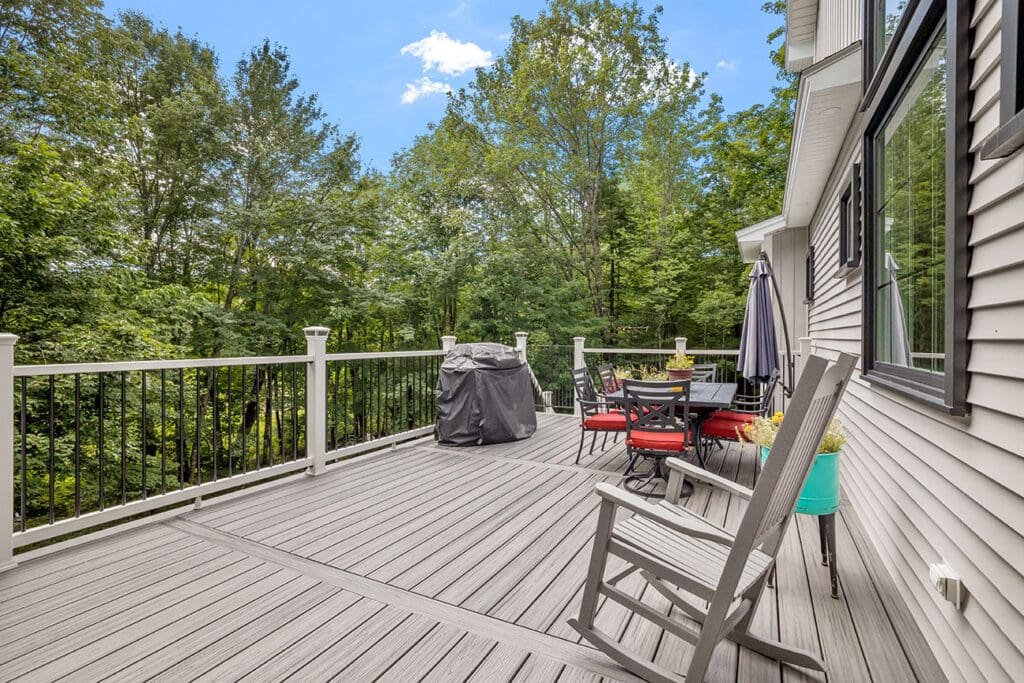
Composite Decking in Terre Haute, Indiana: Capped Composite & PVC Options
Want the wood look without the upkeep? This guide covers the best composite and PVC decking options for Terre Haute and Indiana homes. Heat and slip considerations, warranties, installation details, and price factors, plus how we build them to last.
Why Composite Decking Wins in Indiana
PVC & composite decking give Terre Haute homeowners a low-maintenance surface that handles Indiana’s freeze–thaw cycles, summer UV, rain, and humidity. Capped composite boards resist stains and fading over wood decks, PVC excels near splash zones, and hidden fasteners create a clean, modern look with minimal upkeep.
- Low maintenance: no sanding or staining, just a gentle wash 1–2× per year with a composite-safe cleaner
- Color stability & warranties: fade and stain-resistant caps with long manufacturer warranties for lasting curb appeal
- Traction & safety: embossed, slip-resistant textures suited for pools and shaded areas that stay damp longer
- Heat management: lighter, matte colors and “cool pigment” lines reduce surface temperature on south-facing decks
- Clean, consistent appearance: hidden fastener clip systems, color-matched plugs, breaker boards for long runs, and proper expansion gaps
- Strong ROI in Indiana’s climate: higher upfront cost but lower total cost of ownership vs wood, less maintenance, fewer repairs, and solid resale appeal
Tip: For shade or pool areas, choose lighter/matte boards with higher slip ratings, keep gaps clear for drainage, and maintain ventilation behind skirting.
For a full overview of our services, see our Deck Builders page covering design, framing, and code-smart details.
Best Composite Options for Terre Haute & Vigo County
Indiana’s freeze–thaw cycles, summer UV, rain, and humidity call for moisture-resistant boards with stable color and good traction. These options work well across Terre Haute and nearby communities when installed to manufacturer specs.
Capped Composite (wood–plastic core with protective cap)
- Durable cap resists stains, mildew, mold, and color fade, great for busy backyards and patios
- Wood-like grain with multi-tone variegation for a natural look without annual staining
- Grooved edges accept hidden fastener clip systems; square edges take face screws with color-matched plug systems
- Reliable all-around value in Vigo County when paired with proper gapping and breaker boards on long runs
PVC Decking (cellular PVC)
- Fully synthetic core excels at moisture management, ideal near pools, splash zones, and shaded areas
- Lighter boards with crisp edges; many lines carry high slip-resistance ratings for wet conditions
- Heat varies by color; lighter, matte finishes and “cool pigment” options reduce surface temperature
- Often paired with PVC fascia/risers for a uniform, low-maintenance finish and clean edges
Profiles, Trim & Accessories
- Grooved vs square-edge boards; picture-frame borders; breaker boards to control seams on long runs
- Matching fascia, risers, and nosing; color-matched plugs and hidden fasteners for a clean look
- Rail choices: composite, aluminum, or cable systems to fit budget, style, and maintenance goals
- Skirting with ventilation for airflow; integrate lighting, gates, and drainage for complete systems
Lifespan & Maintenance in Terre Haute
Composite and PVC decking need basic care, just less of it. In Indiana’s freeze–thaw, UV, rain, and humidity, a light, consistent routine keeps capped surfaces looking new and prevents mold/mildew in shaded areas.
Finishes and Cleaning Rhythm
- No refinishing required: wash 1–2× per year with mild soap or a composite-safe cleaner; use a soft-bristle brush, then rinse thoroughly
- Avoid harsh pressure: follow your brand’s guidance; use a fan tip at low pressure and keep the wand a safe distance to protect the cap
- Treat spots promptly: remove sunscreen, grill grease, leaf tannins, and pollen per manufacturer instructions to prevent shadowing
- Clean whole boards/runs (not just spots) for uniform sheen and color; keep board gaps and weep paths clear so water drains
Seasonal Care Checklist
- Spring: Gentle wash, clear debris from gaps/under picture-frame borders, check hidden fasteners and plug caps
- Summer: Rinse pollen, use breathable mats under grills/furniture, elevate planters to avoid trapped moisture
- Fall: Remove leaves, confirm drainage paths, wipe rail caps, check stairs/landings for secure fasteners
- Winter: Use plastic-edge shovels only; apply deck-safe ice melt sparingly and rinse when temps allow
Common Issues & How We Prevent Them
- Mold/mildew in shade: Maintain airflow at skirting, keep gaps/weep holes open, and schedule a gentle wash in spring and fall
- Creep or bounce on diagonals: Follow span charts; tighten to 12″ o.c. for diagonals/patterns and add blocking at borders/stairs
- Color/shine inconsistency: Clean entire runs for even appearance; avoid spot-only cleaning that can create gloss patches
- Fascia edge expansion/oil-canning: Use manufacturer-approved expansion slot patterns, fasteners, and ventilation behind fascia
Heat & Slip Considerations (Pools, Patios, South-Facing Decks)
Composite and PVC boards can retain heat in full sun and get slick when wet. In Terre Haute’s summer UV and humidity, pick cooler, higher-traction options and design for airflow.
- Pick lighter, matte colors with embossed texture to reduce heat retention and improve traction on wet surfaces (great for south-facing decks).
- Choose higher-traction profiles for pool areas and verify the manufacturer’s slip rating; rinse off chlorinated/saltwater splash to prevent film buildup.
- Add shade where practical—pergola, sail shade, umbrellas, or a small pavilion and position seating off the hottest zones.
- Maximize airflow with ventilated skirting, proper ground clearance, and board orientation that encourages cross-breeze; keep gaps/weep paths clear.
- Use stainless or ZMAX hardware near water and lighter colors around concrete or pavers that reflect heat; avoid dark rubber mats that trap heat and moisture.
- Maintain a simple rinse schedule in peak season: quick hose-down on hot afternoons and after pool parties to cool surfaces and improve grip.
Installation Details That Make Composite Last
In Indiana’s climate, following the manufacturer’s specs is everything, especially spacing, gapping, fasteners, and airflow. Do these right and your composite or PVC deck in Terre Haute will look great for years.
Joist Spacing & Board Layout
- Use 16″ o.c. for straight runs; tighten to 12″ o.c. for diagonals, borders, and heavy-use areas (check your brand’s span chart)
- Install a breaker board on long runs to avoid stacked butt joints and to keep gaps uniform
- Set board gaps to the brand’s temperature chart at install to allow proper thermal expansion/contraction
- Add blocking at picture-frame borders, stair landings, and transitions so edges stay flat and fasteners hold
Hidden Fasteners, Plugs & Screws
- Choose the approved hidden fastener clip system for your board profile; use stainless in high-exposure or pool areas
- Face-screw only where the manufacturer specifies and finish with color-matched plug systems for a clean look
- Pre-drill near board ends if required and avoid over-driving to protect the cap from mushrooming or cracks
- Drive fasteners flush and consistent to prevent telegraphing through the capped surface and to keep lines straight
Ventilation, Fascia & Skirting
- Maintain minimum ground clearance and airflow behind fascia and skirting so boards and framing dry after storms
- Ventilate enclosed skirting; keep gaps/weep paths clear to reduce mold/mildew in shaded areas
- Follow the manufacturer’s fascia expansion-slot pattern and fastener schedule to prevent oil-canning
- Keep debris from collecting at picture-frame borders, stair returns, and corners where water can get trapped
Structure & Flashing
- Build on a code-compliant, corrosion-resistant treated frame sized to span charts and local requirements
- Install proper ledger flashing with end dams; add joist/beam tape to protect horizontal framing from standing water
- Use ZMAX or stainless hardware near pools or high-exposure zones to combat corrosion in Midwest conditions
- Verify stair geometry, guard post attachments, and landing details to current code before final surfacing
What Affects Price on a Composite Deck in Terre Haute
For line-item numbers by size and features, see our Deck Cost in Terre Haute guide. Composite/PVC budgets in Vigo County are driven by material tier, rail system, layout complexity, site conditions, and add-ons.
- Board tier & color family
Premium capped composites and PVC with multi-tone variegation, deeper embossing, and longer fade/stain warranties cost more per square foot. - Fastener system & blocking
Hidden clip systems, color-matched plug kits, breaker boards, and extra blocking at borders/stairs add both materials and labor. - Rail systems
Composite, aluminum, or cable rails vary widely in price and install time. Post sleeves, lighting, and custom gates increase totals. - Layout complexity
Picture-frame borders, diagonal patterns, breaker boards, and wrapped stairs raise labor hours and require tighter joist framing spacing (often 12″ o.c.). - Site conditions & footings
Slopes, clay soils, tight access, or landscaping obstacles affect footing type/quantity (bell footings or helical piers), staging, and haul-off. - Upgrades & add-ons
Lighting, privacy screens, pergolas, ventilated skirting, fascia with expansion slots, and under-deck drainage (dry space) increase materials and time.
Budget tips (quick wins)
- Choose a mid-tier capped composite in a lighter, matte color for heat control and value
- Use a simple picture frame (single border) and straight runs instead of diagonals
- Pair composite surface/rails with a robust treated frame protected by joist/beam tape
- Pick aluminum railings for a clean look, durability, and lower maintenance cost
Our Composite Deck Process in Terre Haute, Indiana
Engineered for Indiana weather, inspected in Vigo County, and finished for low maintenance and long service life.
1) Design & Permits
- Confirm spans, loads, joist spacing, and stair geometry to current span charts and local code
- Specify footing depth to frost line, prepare plan set, file permits, and coordinate Vigo County inspections
- Finalize board type (capped composite or PVC), color family, rail system (composite/aluminum/cable)
- Plan timelines for brand lead times, seasonal weather windows, and on-site staging
2) Precision Framing
- Flash the ledger properly; choose connectors and hardware compatible with treated framing
- Size joists/beams to charts; add blocking for borders, stairs, and breaker boards on long runs
- Set board gaps to the manufacturer’s temperature table; maintain consistent ventilation at skirting/fascia
- Verify guard post attachment, stair stringer bearing, and landings for code-compliant framing
3) Moisture & Heat Management
- Use continuous ledger flashing with end dams; apply joist/beam tape to protect horizontals
- Install ventilated skirting and maintain ground clearance so framing dries after storms
- Select lighter, matte boards or “cool pigment” lines for south-facing decks; pick slip-resistant textures near pools
- Use stainless/ZMAX hardware in high-exposure or splash zones; orient boards to promote airflow
4) Finish & Warranty
- Provide a care guide: cleaning schedule, safe ice-melt, furniture feet, and planter best practices
- Conduct final walkthrough, complete punch list, handle debris haul-off, and document the project
- Deliver written warranty terms aligned to product class (fade/stain, structural)
- Offer optional maintenance check-ins to keep gaps clear and airflow strong
Frequently Asked Questions On Composite Decks In Indiana
Does composite get hot in the sun?
Darker boards can feel warm on south-facing decks in Terre Haute summers. Choose lighter, matte finishes or “cool pigment” lines, add shade (pergola/sail), and maintain airflow behind skirting to keep surface temps down.
Can composite go on my existing frame?
Often yes, if the frame meets current span charts, joist spacing (12″ o.c. diagonals when required), and ledger flashing standards. We’ll inspect joists, connectors, ventilation, and clearances in Vigo County before re-decking.
Will composite fade or stain?
Capped boards are engineered for fade and stain resistance and often carry long fade/stain warranties. Keep gaps clear, rinse periodically, and address stains quickly to maintain color consistency.
Is composite slippery when wet?
Many capped composite and PVC boards use embossed, slip-resistant textures with solid wet-traction ratings. For pools and shaded areas, pick higher-traction profiles and follow the brand’s cleaning guidance to prevent film buildup.
How do I clean composite in Terre Haute?
Wash 1–2× per year with mild soap or a composite-safe cleaner and a soft brush. Rinse pollen and debris, avoid harsh pressure, and treat sunscreen/grease promptly. Clean entire runs (not just spots) for uniform sheen.
What’s the expected lifespan?
With proper framing, flashing, and airflow, composite/PVC surfaces can last for decades. A treated frame protected with joist/beam tape and corrosion-resistant hardware performs well in Indiana’s freeze–thaw climate.

Need further assistance?
Unsure about something? Get in touch with us for a personalized consultation.
Ready for a Low-Maintenance Composite Deck?
From capped composite to PVC, we engineer decks for Terre Haute’s sun, rain, and freeze–thaw. Code-compliant framing, proper expansion gaps, and color-matched plugs. Exploring options? Start with our Deck Builders in Terre Haute page.
Serving Terre Haute, Clinton, Rockville, and surrounding areas.
