
Deck Framing Protection in Terre Haute, Indiana: Ledger Flashing & Joist Tape (Complete Guide)
Keep your deck frame dry, strong, and code-compliant. This guide explains when to use deck ledger flashing and joist tape, how they prevent rot in Indiana’s freeze-thaw cycles, what they cost, and how to make the right call for re-deck vs new deck builds in and around Terre Haute.
What This Guide Covers
Table of Contents
Building new or re-decking? Our custom deck builders page covers options, code notes, schedules, and FAQs.
Why Moisture Protection Matters in Indiana
Indiana’s freeze–thaw cycles drive water into tiny gaps, then expand as temperatures drop, accelerating micro-cracks, fastener movement, and hidden rot. The highest-risk spots are the deck ledger connection, joist tops, and beam/rim tops. With composite or PVC surfaces, the deck can look perfect while the frame quietly deteriorates. If you want long-term deck framing protection that resists our climate, combine deck ledger flashing in Terre Haute with butyl joist tape in Indiana so water sheds away and fastener penetrations are sealed.
Why decks here fail sooner (and where)
- Freeze–thaw expansion widens hairline checks and screw holes over time
- Capillary wicking at end grain keeps joist and beam tops damp after storms
- Treated-lumber chemistry can speed corrosion on the wrong fasteners/hardware
- Wind-driven rain and snowmelt concentrate moisture at the house ledger
- Low, shaded, or ground-hugging decks dry slowly and trap humidity
- Composite/PVC boards hide early warning signs until rot is advanced
The fix that works (and satisfies inspectors)
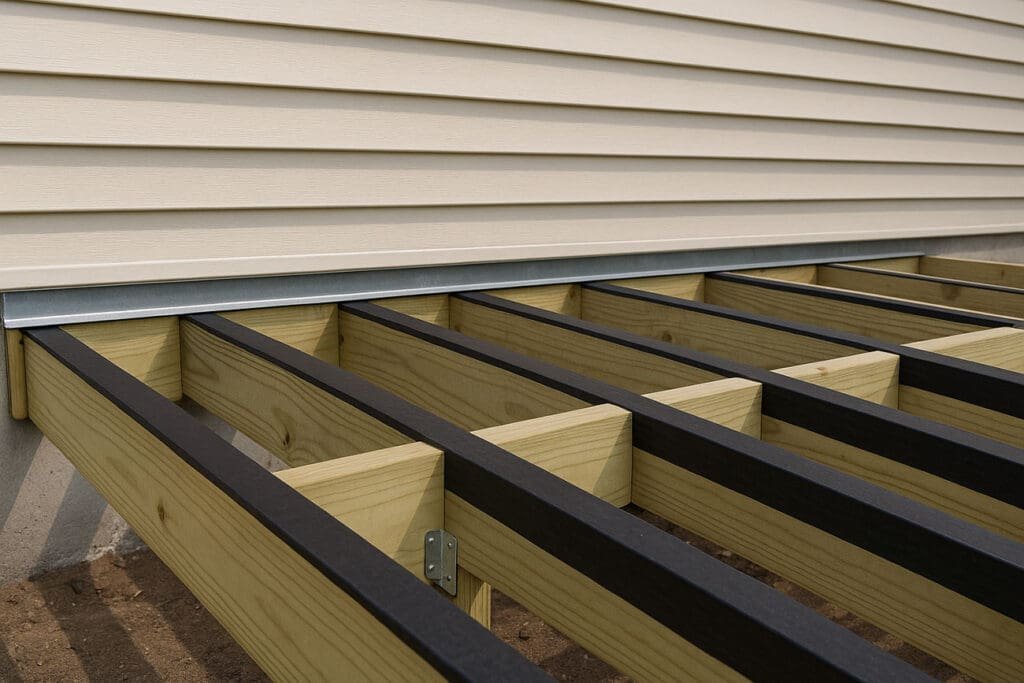
- Install properly lapped ledger flashing, integrated behind the WRB, with a clean drip edge past the decking plane
- Apply butyl joist tape on joist, beam, rim tops and cap freshly cut ends to block wicking
- Use corrosion-resistant fasteners/hardware (ZMAX, hot-dipped galvanized, or stainless) compatible with treated lumber
- Maintain a subtle slope away from the house where appropriate to discourage ponding at the ledger
- Preserve airflow with small ventilation gaps and avoid trapping moisture behind picture-frame borders
- Document the work with photos and schedule seasonal checkups so small issues don’t become structural repairs
Bottom line: In our climate, properly detailed ledger flashing plus butyl joist tape is a small upgrade that prevents big repairs, extending frame life, supporting warranty-level “good building practice,” and helping you avoid interior leaks at the ledger.
Deck ledger flashing in Terre Haute: materials, placement, mistakes
Ledger flashing is the primary defense that keeps water from sneaking into the deck-to-house connection. In Indiana’s freeze–thaw climate, especially around Terre Haute. Properly detailed deck ledger flashing prevents hidden wall damage, rot at the rim joist, and costly interior leaks.
What Ledger Flashing Does
- Sheds water away from the deck-to-house joint so it can’t soak sheathing
- Protects rim joist, housewrap, and deck framing from persistent wetting
- Reduces risk of interior leaks, mold, and freeze–thaw damage
- Preserves fasteners and ledger screws by limiting corrosion at wet interfaces
Where It Goes (and how it should look)
- Tucked behind the WRB (housewrap) and lapped shingle-style so water always sheds out
- Over the ledger face with a defined drip edge projecting past the decking plane
- Extended 1–2″ beyond deck ends with simple end dams so water doesn’t run behind trim
- Set with a slight outward pitch and a small gap above deck boards to keep the drip line clean
Best Materials for Indiana Decks
- Stainless steel or G185 galvanized steel for long-term durability with treated lumber
- PVC/composite Z-flashing to resist corrosion and simplify tricky transitions
- Butyl self-adhered flashing membrane as a secondary layer around penetrations and irregular surfaces
- Avoid bare aluminum against ACQ/CA treated lumber unless fully isolated with a compatible barrier
Common Ledger Flashing Mistakes That Cause Leaks
- Reverse laps that catch water instead of shedding it
- Fastening through the top leg or sealing edges shut so water can’t weep out
- Stopping short at deck ends, letting runoff track behind corner trim
- Skipping end dams or not projecting a clear drip beyond the decking edge
- Poor WRB integration (cutting or tucking wrong) that routes water into the wall
- Metal/fastener incompatibility leading to galvanic corrosion and premature failure
Quick Installer Checklist (use before you close it up)
- Dry-fit flashing, confirm shingle laps with WRB, and verify outward pitch
- Create end dams and extend past deck corners to control runoff
- Keep weep paths open; don’t caulk shut the drip edge or trap water
- Use corrosion-resistant fasteners and avoid piercing the upper leg
- Add butyl membrane at irregularities, fastener clusters, and ledger penetrations
- Photo-document layers for inspector review and homeowner records
Pro Tips for Re-Decks and Retrofits
- Temporarily lift or remove the lowest siding course to integrate flashing behind the WRB
- Repair any softened sheathing; add a butyl backdam at the top edge before reinstalling flashing
- Cap the ledger with compatible flashing tape where fasteners penetrate and add the metal Z over it
- Pair with butyl joist tape on joist/beam tops so the entire connection sheds water, not just the ledger
Key takeaway: For deck ledger flashing in Terre Haute, aim for clean shingle laps, a visible drip edge, corrosion-proof materials, and open weep paths. Get those right, and you dramatically cut the risk of hidden rot and interior leaks.
Joist tape in Indiana: butyl vs asphalt, where to apply, lifespan
Joist tape is a small upgrade that delivers big deck framing protection in Indiana. By sealing fastener penetrations and shielding joist and beam tops, it slows the wet–dry cycling that leads to checking, splitting, and rot. For projects in Terre Haute, joist tape helps the frame keep pace with composite or PVC decking.
What joist tape does
- Seals screw penetrations so water can’t wick into joists and beams
- Shields top edges where sun, rain, and traffic concentrate wear
- Reduces checking and splitting from repeated wet–dry cycles
- Limits corrosion at fasteners and hangers that see standing moisture
- Extends frame life under composite and PVC surfaces
- Supports good building practice many brands expect
Butyl vs asphalt joist tape: what to choose for Indiana
| Factor | Butyl tape | Asphalt tape |
|---|---|---|
| Adhesion across seasons | Strong, stable | Variable |
| Install cleanliness | Low mess | Can be gooey |
| Cold-weather handling | Remains workable | Can stiffen |
| Hot-weather behavior | Holds shape | May slump |
| Price | Higher | Lower |
| Best fit for freeze–thaw | Yes (Terre Haute/Indiana) | Only with ideal prep |
Where to apply joist tape
- Full-length joist tops so every screw lands on a sealed surface
- Beam and built-up girder tops, including seams between plies
- Rim joist tops where picture-frame borders add fasteners
- Stair stringer tops and landings exposed to splash and snowmelt
- Freshly cut end grain to reduce capillary wicking at cuts
- Ledger cap area as a secondary layer in complex details
How to apply it
- Clean and dry the lumber; remove dust before starting
- Center the tape on each member without stretching over edges
- Press firmly with a roller to eliminate air channels
- Overlap ends by at least an inch; avoid fishmouths at joints
- Drive fasteners through the tape; it self-seals around shanks
- Keep a slight crown so water sheds to the sides
Re-deck scenarios
- Remove old boards and inspect every joist, beam, and hanger
- Replace any soft or split members; tape prevents, it doesn’t repair
- Let the frame dry thoroughly before taping
- Apply tape to joists, beams, and rims before new decking goes down
Quantities and cost signals
A typical 12×16 deck at 16 in. o.c. uses a few rolls for joists plus extra for beams and rims. Wider tape sized to the joist width speeds install and improves coverage. The total is a small fraction of the project but meaningful for lifespan, especially under composite or PVC decking.
Compatibility and warranty notes
- Match fasteners and hardware to treated lumber chemistry
- Follow the decking brand’s span and fastener charts
- Preserve ventilation gaps at borders and fascia edges
- Pair with proper ledger flashing to manage water at the house
Common mistakes to avoid
- Applying over wet, dirty, or frozen lumber that kills adhesion
- Stretching tight over corners, creating thin spots and tears
- Leaving gaps, bubbles, or fishmouths that channel water
- Skipping beam tops and rim caps where water collects
- Trapping moisture by sealing drip paths or airflow
- Using tape instead of replacing damaged structural members
Quick homeowner checklist
- Joist, beam, and rim tops taped and firmly rolled
- End grain at cuts capped to reduce wicking
- Fasteners and hardware corrosion-rated for treated lumber
- Decking brand specs for spacing and fasteners followed
- Ventilation paths open at borders and fascia
- Ledger managed with proper flashing separate from tape
- Photo documentation of layers before boards go down
- Local climate considered: butyl tape selected for Indiana conditions
Costs for a 12×16 deck: rolls needed and ROI
- Joist tape (butyl): small material add relative to the full deck; higher value under composite/PVC
- Ledger flashing: low material cost; most value comes from correct integration with WRB/siding
- Joist tape width affects price and coverage; wider rolls cost more but speed install
- Expect the whole moisture-protection package to be a fraction of total project cost
12×16 deck example (16 in. o.c., joists spanning 12 ft)
- Deck width 16 ft → about 13 joists; each joist needs ~12 ft of tape
- Joists only: 13 × 12 ft ≈ 156 ft of tape → about 3–4 rolls at 50 ft/roll
- Joists + beam + rims + optional ledger cap: up to ~220–240 ft → about 4–5 rolls
- Ledger flashing length ≈ deck width (about 16 ft), plus small overhangs for drip and end dams
Labor considerations
- Surface prep and firm rolling matter more than speed; plan short, steady passes
- Joist tape install often fits inside normal framing workflow with minimal schedule impact
- Ledger flashing integration may add time to lift the bottom course of siding and re-lap the WRB
- Photo documentation of layers is smart for inspections and future resale
ROI you can feel
- Extends frame life to better match composite/PVC surfaces
- Reduces warranty risks by aligning with good building practice
- Lowers likelihood of hidden wall repairs from ledger leaks
- Improves buyer perception with documented “protected framing”
- Cuts down on screw-halo staining and soft spots over time
- Helps maintain fastener and hanger integrity in wet zones
Cost-saving tips without cutting corners
- Use tape widths sized to your joist/beam tops to avoid trimming waste
- Prioritize beam tops, rim tops, and high-splash areas if budget is tight
- Keep drip paths open at edges; don’t over-caulk and trap water
- Pair tape with proper ledger flashing so both frame and house connection shed water
Bottom line: for a 12×16 deck in Terre Haute, expect roughly 3–5 rolls of butyl joist tape depending on coverage and one clean run of ledger flashing. The spend is small, the protection is big, and the payback comes from avoided rot repairs and longer, quieter service life.
Code and warranty notes for Indiana decks
In Vigo County and most IRC-based jurisdictions, you’re expected to manage water at the deck-to-house connection and use compatible hardware with treated lumber. Composite and PVC brands also assume dry, well-detailed framing for their warranties. Use the notes below to cover both code compliance and warranty expectations in Terre Haute.
What inspectors typically look for
- Continuous ledger flashing integrated behind the WRB with shingle-style laps
- A slight outward pitch and a visible drip edge that extends past the decking plane
- Corrosion-resistant connectors and fasteners rated for treated lumber (ZMAX, G185, or stainless)
- Proper ledger attachment into structure with approved bolts/screws per engineering or manufacturer guidance
- Joist spacing and spans that match the selected decking brand’s charts
- Clean terminations at ends with simple end dams so runoff can’t track behind trim
Warranty essentials for composite/PVC decking
- Follow the brand’s joist spacing, gapping, and fastening instructions exactly
- Use approved fasteners/clip systems; driving through joist tape is fine when installed per guide
- Maintain ventilation and ground clearances recommended by the manufacturer
- Cap freshly cut end grain with butyl tape and keep fastener penetrations well sealed
- Avoid chemical and metal incompatibilities that can corrode hardware or stain boards
- Keep dated photos and receipts; documentation supports any future warranty claim
Hardware and material compatibility
- ZMAX or G185 galvanized, hot-dipped galvanized, or stainless hardware with treated lumber
- Isolate dissimilar metals; avoid bare aluminum directly against ACQ/CA-treated wood
- Use polymer-coated or stainless screws specified by the decking brand
- Choose butyl membranes compatible with your WRB and metal flashings; verify asphalt compatibility before use on plastics
- Pre-plan fastener paths so penetrations through tape self-seal without tearing
- Replace corroded hangers, bolts, or flashing during re-decking before you cover the frame
Documentation that helps at inspection and resale
- Photos of WRB integration and ledger flashing laps before siding goes back
- Photos of joist/beam/rim taping and any capped cuts
- Labels or spec sheets for fasteners, hangers, and flashing materials
- A copy of the decking brand’s current installation guide used on the job
- Notes on slope away from the house and any ventilation gaps at borders
- A signed final checklist with dates for your records and the homeowner
Bottom line: meet code by shedding water at the ledger and using corrosion-resistant, compatible hardware; protect warranties by following brand charts to the letter and documenting your moisture-management steps.
Decision Guide: Do You Need Both?
Use this quick logic to choose ledger flashing, joist tape, or both for Indiana’s freeze–thaw climate and Terre Haute inspections.
- Attached vs freestanding: if the deck attaches to the house, install ledger flashing integrated behind the WRB with a visible drip edge
- Decking and layout: for composite/PVC, diagonals, or picture-frame borders (more fasteners), use joist tape on all joist, beam, and rim tops
- Re-deck vs new build: during re-decks, replace any damaged members, then add joist tape before new boards; new builds should include both from day one
- Site conditions: low, shaded, damp yards or areas near sprinklers/pools benefit from joist tape plus ventilation gaps to speed drying
- Budget triage: prioritize ledger flashing first; if funds are tight, tape beam tops, rims, and stair stringers before joist fields
- Inspection and warranty: if you want smooth inspections, better resale, and fewer warranty headaches, pair ledger flashing with butyl joist tape and keep photo documentation
Bottom line: for most Terre Haute decks, ledger flashing plus butyl joist tape is the safest long-term setup; scale tape coverage based on deck surface, layout, and site moisture.
Our Local Process in Vigo County
For decks in Terre Haute and throughout Vigo County, we follow a clear, inspection-first process that solves moisture problems at the source and documents everything for you.
- Site visit and safety check: assess access, utilities, and immediate hazards; photograph current conditions
- Moisture and structure assessment: inspect the ledger area, sheathing, joist crowns, beams, hardware, and any prior repairs
- Ledger and WRB integration plan: map a shingle-style lap for flashing behind the WRB with a visible drip edge and end dams
- Framing protection plan: specify butyl joist tape coverage for joists, beams, rims, and fresh cuts to seal fastener penetrations
- Hardware and compatibility review: match fasteners and hangers to treated lumber chemistry (ZMAX, G185, stainless) and avoid dissimilar metal issues
- Scope and estimate: deliver a written scope with photos, material list, and a line-item estimate you can approve or adjust
- Permits and inspection coordination: align details with local expectations and prepare documentation for smooth approvals
- Final walkthrough and care tips: review photos, maintenance intervals, and simple seasonal checks to keep water moving off the frame
Serving Terre Haute, Clinton, Cayuga, Rockville, Brazil, Covington, Crawfordsville, and Greencastle. Request a free estimate or call 765-505-8383.
Installation Tips
For Indiana’s freeze–thaw conditions, these steps help deck ledger flashing and butyl joist tape perform as intended.
- Work only on dry, clean lumber; brush off sawdust, avoid wet or frozen wood, and follow the tape’s recommended install temperature
- Roll butyl tape firmly with a J-roller or block to remove air channels; overlap ends by at least 1 inch and avoid fishmouths at joints
- Lap flashing shingle-style behind the WRB so water sheds out; form a visible drip edge and simple end dams that extend past deck corners
- Maintain a slight outward pitch at the ledger/flashing interface where appropriate so water doesn’t pond against the house
- Pre-plan picture-frame borders and diagonal layouts; higher fastener counts benefit from full joist/beam coverage and spacing per the decking brand’s chart
- Use corrosion-resistant fasteners and hardware (ZMAX, G185, hot-dipped galvanized, or stainless) and isolate dissimilar metals to prevent galvanic corrosion
Example Materials Plan (12×16 Deck)
- Butyl joist tape rolls sized to members (about 1.75–2 in for joists, 3–4 in for beams and rims); plan on 3–5 rolls at 50 ft each depending on coverage
- Formed metal or PVC ledger flashing integrated behind the WRB with a slight outward pitch, 1–2 in drip projection, and simple end dams; length ≈ deck width plus returns
- ZMAX or stainless hangers, structural ledger screws/bolts per engineering or inspector guidance, and polymer-coated or stainless decking screws/clip system
- Decking per brand span chart with compatible fasteners; include picture-frame/border pieces if used
- Drip edge or perimeter flashing to kick water clear of fascia and skirt boards while preserving weep paths
- Sealants and accessories: butyl self-adhered flashing membrane for irregular penetrations, end-grain caps/tape for cuts, and spacers/shims to maintain ventilation gaps
Frequently Asked Questions On Deck Flashing In Terre Haute, Indiana
Do I need joist tape on every deck or only composite?
Joist tape is most impactful under composite or PVC, but it still helps wood decks by sealing fasteners and protecting top edges. For Terre Haute’s freeze–thaw swings, taping joist, beam, and rim tops is recommended on most projects.
Will joist tape void my decking warranty?
Not when installed correctly. Follow the decking brand’s span and fastener charts, maintain ventilation and clearances, and use compatible fasteners. Tape self-seals around screws and supports good building practice.
What flashing lasts longest?
Stainless or G185 galvanized metal and PVC/composite flashings perform well with treated lumber. Avoid bare aluminum against ACQ/CA unless fully isolated. Integrate flashing behind the WRB with a drip edge and end dams.
How long does joist tape last?
Quality butyl tapes are designed for long-term service when applied to clean, dry lumber and protected under decking. Good prep and firm rolling are key; inspect seasonally.
Is butyl tape better than asphalt in freeze-thaw climates?
Yes. Butyl joist tape maintains adhesion across temperature swings and installs cleaner. Asphalt can work with ideal prep and temperatures, but butyl is usually the safer long-term choice in Indiana.
Can I add tape during a re-deck?
Yes, if the frame is sound. Remove boards, repair any damaged members, dry the lumber, then apply tape before new decking. Cap freshly cut end grain to limit wicking.
How much does tape add to a 12×16 deck cost?
Typically 3–5 rolls to cover joists, beams, and rims, depending on spacing and layout. Material cost is a small fraction of the project; value is highest under composite/PVC surfaces.
Can bad flashing cause interior leaks?
Yes. Reverse laps, short runs at corners, or fasteners through the upper leg can funnel water into the wall. Proper WRB integration, a visible drip edge, and simple end dams prevent this.

Need further assistance?
Unsure about something? Get in touch with us for a personalized consultation.
Stop Rot Before It Starts
Keep water out of your ledger and off your framing with proper flashing and butyl joist tape. Book a free deck inspection in Terre Haute and nearby towns.
Serving Terre Haute, Clinton, Rockville, and surrounding areas.
